Rising From The Last War: The Warforged
The warforged are one of the defining elements of Eberron. Sentient golems created to fight in the Last War, they must find their purpose and place in the world now that the war is over.
Warforged are often dismissed as "magical robots," but it's a flawed analogy. Warforged are formed from wood and metal, but they are living creatures. Their musculature is formed from a rootlike substances, and they have a circulatory system of alchemical fluids. A warforged can be healed, and they can even be poisoned, though it's not easy. Warforged have feelings, and while this is something that's debated in Eberron itself, the fact is that they have souls; the real mystery is where those souls come from. Robot or not, a warforged character is quite different from other species. As a warforged you don't eat, sleep, or breathe. Your armor is your skin. Whether you embrace it or rebel against it, you were created for a purpose and your class features may be reflected in your physical design. A warforged barbarian could describe their Rage as entering an advanced battle mode, while a warforged sorcerer could present themselves as a living wand.
The warforged have gone through multiple design iterations in Eberron, from an early Unearthed Arcana article when Fifth Edition was first released to a more developed version in the Wayfinder's Guide to Eberron. The final version released in Rising is quite different from Wayfinder's, and I want to discuss those changes.
Integrated Protection
When the warforged were released in the original Eberron Campaign Setting, one of their defining features was that they didn't wear armor; they WERE armor. In that early edition a warforged character used a feat to set their armor class, and once set, they had it for the rest of their life. This added a unique flavor to the race, though it did require a character to burn a feat. In the earliest draft of the WGtE, we mimicked this original model by tying armor type to subrace. The juggernaut subrace had the equivalent of heavy armor, the skirmisher was medium, and the envoy was light. This mirrored that original design; you made a choice at first level and that defined your armor moving forward. But it clashed with the inherent flexibility that's a pillar of Fifth Edition. So it was shifted shortly before release to a model that allowed a warforged to transform their integrated protection—a bit of an odd idea, but the original warforged juggernaut prestige class had introduced the idea that warforged could evolve their bodies, so it wasn't without precedent.
While this approach added flexibility, it raised a lot of questions and corner cases. Did Integrated Protection count as wearing armor for purposes of feat prerequisites? How did it interact with class features, such as Fighting Styles? Could it be targeted by heat metal (which was a threat to warforged in 3.5!). Likewise, because warforged couldn't acquire new armor, we tried out a mechanic that let them add their proficiency bonus to their armor class, essentially self-enchanting as they gained levels. This was INTERESTING, but there were many concerns about its impact on game balance.
This all led to the current approach. In Rising From The Last War, a warforged has "defensive layers that can be enhanced with armor." A warforged has an innate +1 bonus to Armor Class, and can don or remove armor. It's noted that to don armor, you must "incorporate it into your body," a process that takes an hour. Once you do this, it cannot be removed against your will.
Some people feel that this undermines the idea of warforged. But this is a matter of perception. Don't think of it as warforged WEARING armor as other characters do. You don't just wear armor; you incorporate it into your body. When a warforged goes through this hour-long process, they are literally peeling off their outer plating, disassembling the new armor and fusing it to their body, piece by piece. It's like a human peeling off their skin and gluing new skin on. A critical point for me is that this isn't easy or comfortable, and it's not something many warforged ever do. MOST warforged live their entire lives using the armor they were first forged with, because it's not EQUIPMENT for them, it's their body. However, if there is a need, they are CAPABLE of going through this extreme process of body modification, removing their plating and incorporating new armor.
Ultimately, this approach to armor is cleaner from the perspective of both interaction with other rules elements and long-term character balance. It doesn't change the IDEA that warforged have a different relationship to their armor than other creatures do. Don't think of it as "wearing armor"; think of it as modifying your body. It's also up to you to decide what this looks like. You are incorporating the armor into your body, not wearing it. You don't look like a person in armor; you look like a warforged.
Warforged Subraces
The original Unearthed Arcana included three warforged subraces. These are notably missing from Rising From The Last War. The simple reason for this is that the subraces were themselves a holdover from the earlier design where Armor Class was tied to subrace. The Envoy warforged was an inherently stronger subrace than the Juggernaut, because originally the Envoy was limited to light protection and the Juggernaut had heavy armor. It was a parallel to the original 3.5 design in which warforged chose feats that locked in their armor class at 1st level. Once this limitation was removed from Integrated Protection, the foundation for subraces was no longer there.
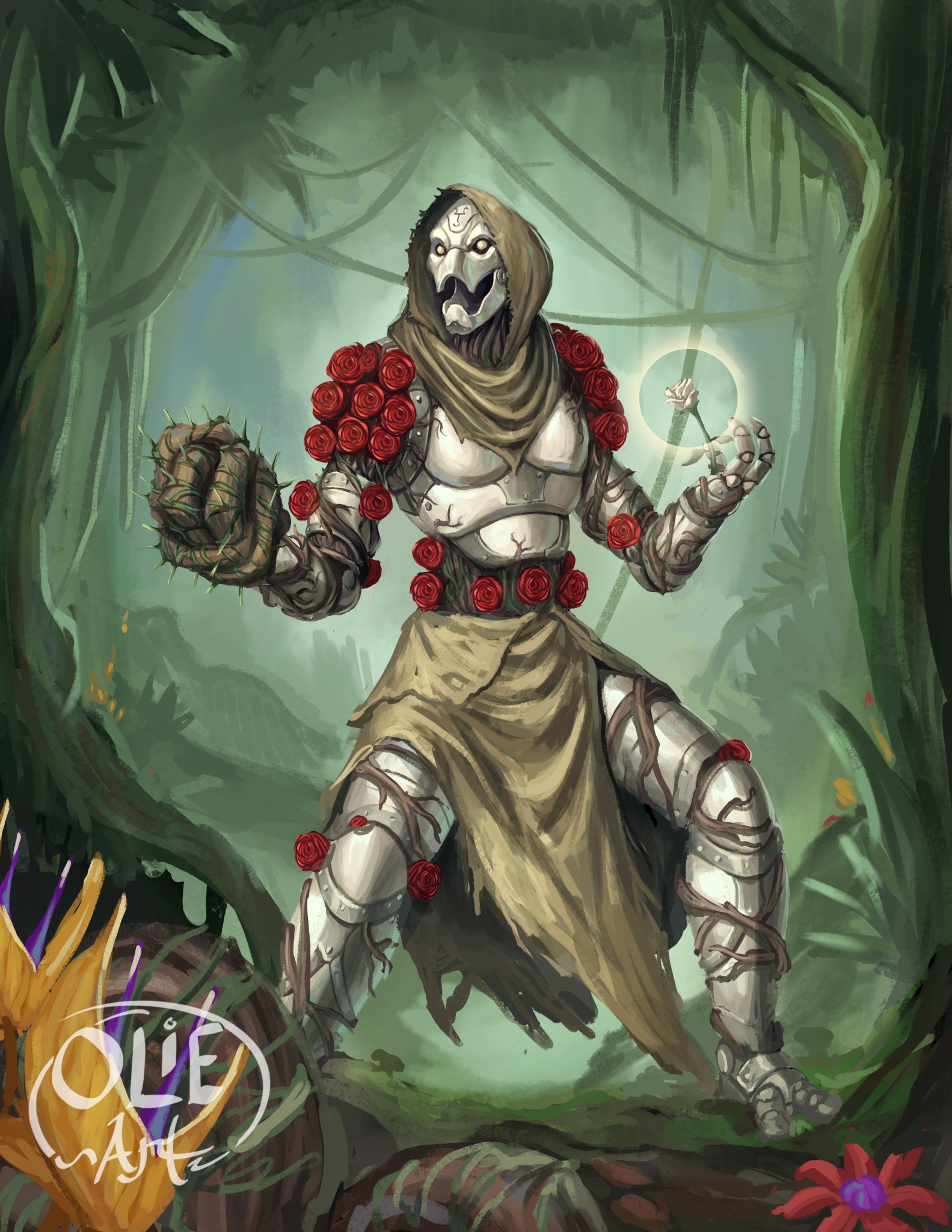
The element I'm sad to lose from the subraces is the idea of the Envoy having an integrated tool. The picture above is of a character I played in a local Eberron campaign—the warforged druid Rose, who has an integrated herbalism kit. I love the idea of a warforged being designed for a specific purpose, and having the tool to perform that function as an inherent part of their body. However, this was never intended to be the default for all warforged. Again, in the original design the Envoy was limited to light armor; they were supposed to be rare prototypes, not the most common design. With that said, I still love the concepts that can be created using integrated tools, so you'll find some variations of this idea in Exploring Eberron, the book I'm currently creating for the DM's Guild; the portrait of Rose above is an illustration from this book. One of these is the addition of an integrated tool as a common magic item, parallel to the armblade; with the DM's permission, a warforged character could begin with an integrated tool, reflecting the idea that it was part of their original design. I'm including the text of that tool below as a sneak peek, but there's another approach in the book for warforged who don't want to sacrifice an attunement slot.
Exploring Eberron: Integrated Tool
Wondrous item, common (requires attunement by a warforged)
An integrated tool can be created using any of the following: any artisan’s tools weighing no more than 10 pounds; any musical instrument weighing no more than 10 pounds; a forgery kit; an herbalism kit; or thieves’ tools. When you attune to the item, it merges with your body and cannot be removed as long as you’re attuned to it. While the tool is part of your body, you must have your hands free in order to make use of the tool.
That's all for now. Thanks as always to my Patreon supporters, who keep this website going!