IFAQ: Elves and Pugs
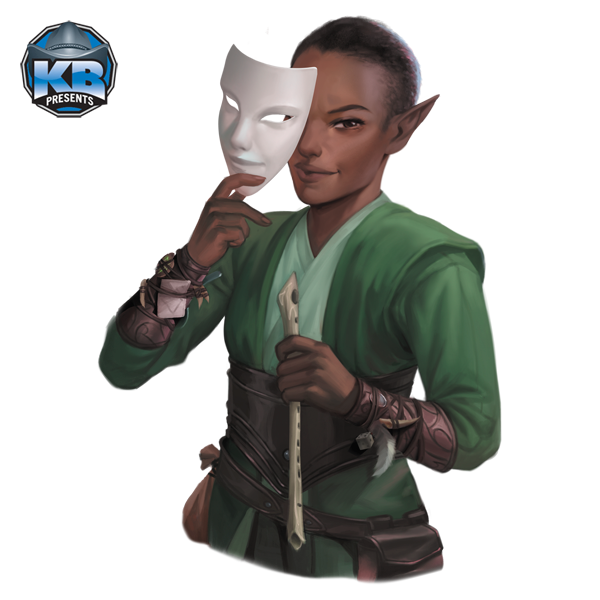
In the fifth edition of Dungeons & Dragons, elves can live to be up to 750 years old. In the past I've written many articles about the elves of Valenar and Aerenal and how their long lifespans have affected their culture. But what about the elves of the Five Nations, who are part of a culture driven by short-lived humans? This month, my Patreon supporters posed a number of interesting questions on this topic.
An adult elf of the Five Nations is not only older than the current monarch of their nation, they're older than the NATION, given that Galifar only dissolved a century ago. How does their long lifespan affect their national loyalty?
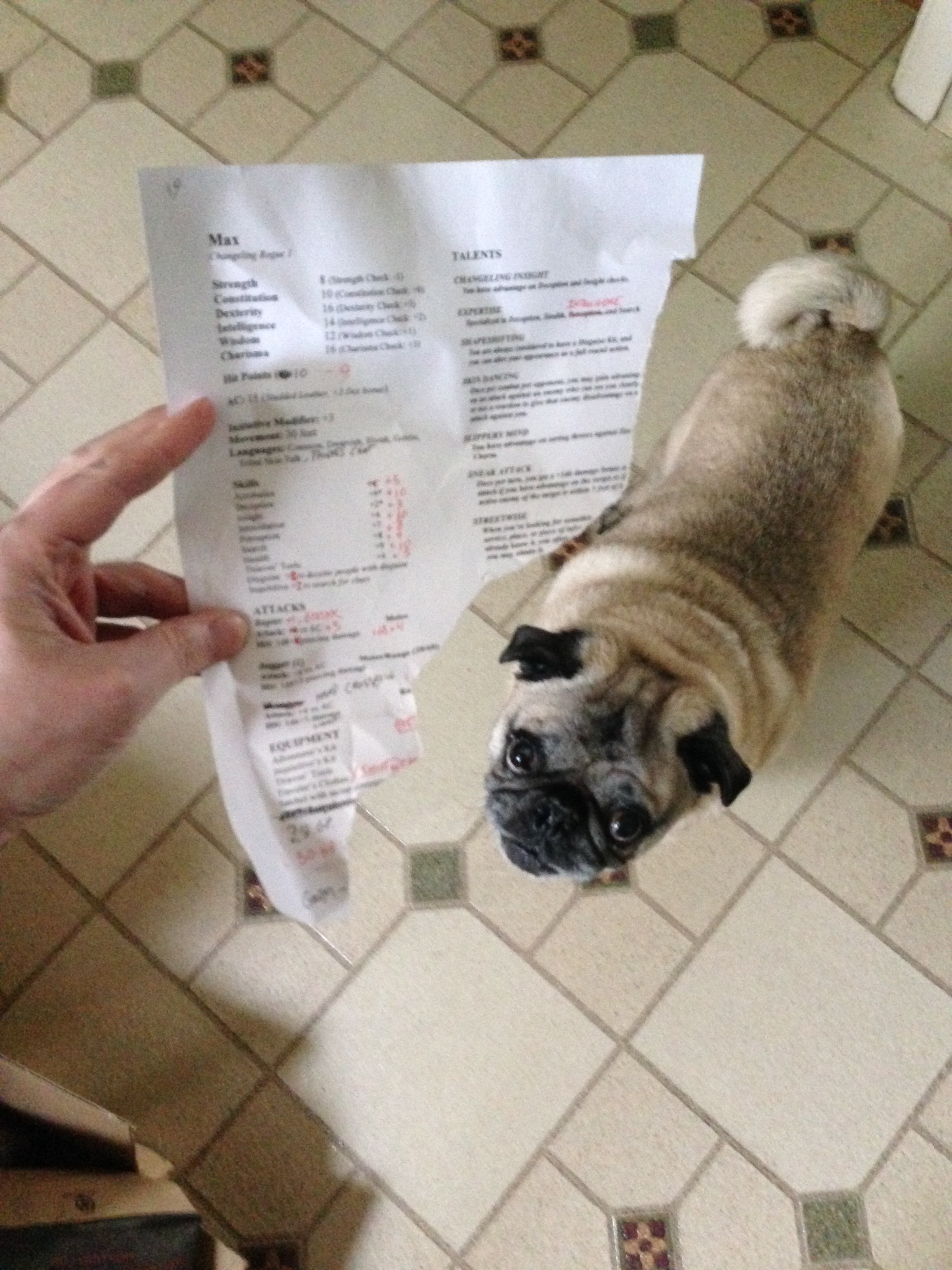
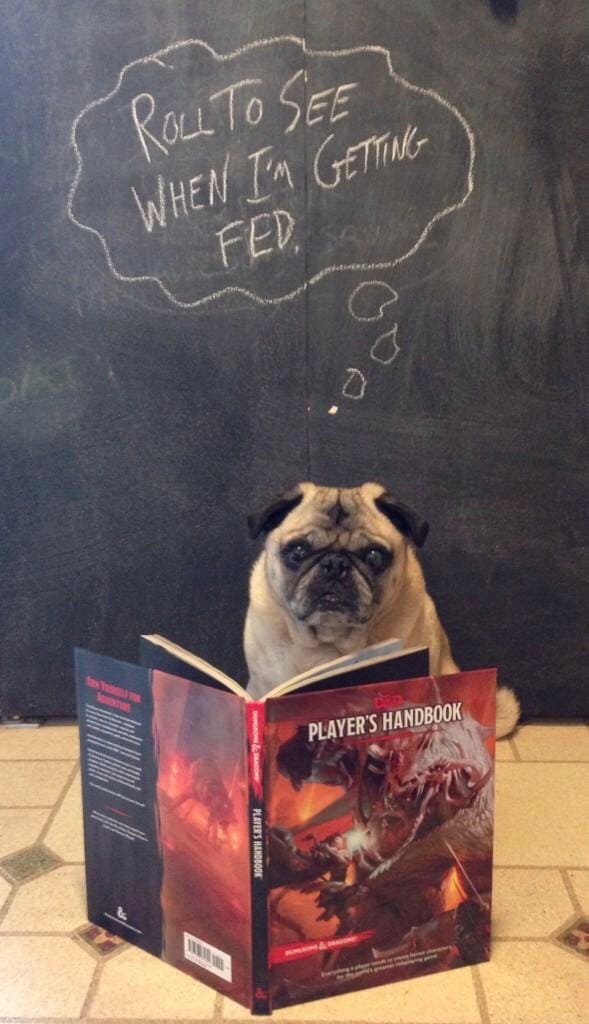
First of all, we've always said that most demihumans of the Five Nations tend to put their national identity before their species. A third-generation Brelish halfling might support the Glidewing in the Race of Eight Winds as a nod to their Talentan heritage, but they consider themselves Brelish, not Talentan. So that's the first point to consider: elves born in the Five Nations generally embrace that culture. Which comes to the second point: until the Last War, the Five Nations were united as Galifar. But there were still Five Nations, each of which was culturally distinct and maintained traditions that predated Galifar; Galifar united them under a single ruler and code of laws, but it didn't erase that cultural identity. The point of this is that not only does your 300-year-old Brelish elf think of themselves as Brelish, they've thought of themselves as Brelish far longer than a 30-year-old human; they've had far longer to invest in the traditions of Breland and to have a very strong sense of what it means to be Brelish. Which ties to the second point. Because their long lifespan means they'll outlive the humans around them—whether we're talking about their monarch or their neighbor—the elves of the Five Nations tend to invest in institutions and customs more than in individual humans. An elf invests in the concept of Breland more deeply than in any one ruler. Likewise, they invest in families more than individuals, seeing the living members of the family as the latest incarnation of that beloved family. For an off the cuff example, consider the relationship between humans and dogs. My household is a pug household. We had a pug we loved, and when he passed away we got a new pug—who is very much his own person, but also very much a pug. And when he passes away, I expect we'll get another pug. We love our pugs, and in the moment, we love our current pug most of all. But we also know that barring tragedy we will outlive him. So we love him in the moment, we give him the best life that we can, and when he passes we'll honor him by bringing a new pug into our lives. What we're NOT going to do is suddenly decide to get a St. Bernard; we've become pug people, and we don't WANT a different dog.
This basic principle applies both to national identity and to an elf's personal relationships with shorter lived races. Breland in this instances is "Pugs" while King Boranel is "The Current Pug." The elf who has chosen to live in Breland for three centuries loves Breland more than any other nation. Most likely, they also love Boranel; they may fondly remember Wroaan or other rulers, but Boranel is alive and with them now; they will always honor Wroaan's memory, but they support the current king. Unless, of course, they don't like Boranel, in which case they may grumble and think "There's always a bad one in the litter, but in another ten yeas we'll get a new one that will be better." That elf doesn't want to go live in Thrane any more than I want to get a St. Bernard; they've become comfortable with Breland and it's become part of their identity. With this in mind, I would also say that Brelish elves in particular likely strongly oppose the Swords of Liberty and the anti-monarchy movement, because the four hundred year old elf is far more invested in the institution of the Brelish monarchy than the human who's only lived with it for twenty years. They've invested in the idea of Breland for centuries, and part of that idea of Breland is that it's a monarchy.
As I said, I'd extend this to an elf's personal relationships with humans. In playing an elf character, I'd consider whether I know the ancestors of one or more of the other player characters. I might ask one of the other players (it's a collaborative story and I want to work with them, not impose my story on them ) if they're OK with the idea that my character has had a long relationship with their family. Throughout the campaign, I might discuss my experiences and adventures with their ancestors. It might even be that the reason I'm part of the adventuring party is to look after that character—because their grandfather would never forgive me if anything happened to them. If you're familiar with Deep Space Nine, there's a touch of this in the way Dax refers to their previous hosts. As an elf, play up the fact that you may have known Queen Wroaan or met Kaius I. When you're at a store in Sharn, mention how it use to be a restaurant a century ago and had the best fried spider legs in the city—they just don't make them like that any more.
It's suggested that some elf immigrants to Khorvaire came with a plan to marry into human families and essentially outlive their way to power, inheriting family fortunes from their short-lived spouses. Canon lore suggests that this was abandoned out of an initial revulsion for the Khoravar, but how has it played out in the present day?
The canon answer is clear: elves haven't taken over all the noble families of Galifar, and in fact, very few elf nobles are mentioned. The question, then, is WHY. The answer is that people of Galifar are well aware of the disparate lifespans of their neighbors and that the laws of the land take it into account. Any position with a lifetime appointment will have clauses that allow for the holder to be removed, so you can't just appoint a warforged to a lifetime position and then have no way to remove them ever. Meanwhile, nobles will always has pre-nuptial agreements to address this; I think the standard one is simply that a spouse doesn't inherit the title. It passes to the eldest child or, failing that, to a sibling.
Looking at an example of this in play, Kaius III of Karrnath is married to Etrigani, an Aereni elf. As long as Kaius is alive, Etrigani carries the title of queen. When Kaius dies, however, the crown of Karrnath would pass to their eldest child, not to Etrigani. If they have no children (and currently they don't), it would pass sideways along the line to Kaius's sister Haydith. A spouse could likely serve as a regent while waiting for a child to come of age, but they can't claim the title as their own... thus preventing an elf from marrying into a family of human nobles and holding the title for the next five centuries.
There are a few elf nobles in the Five Nations, and it's certainly the case that if you're an Aundairian elf with the noble background, you may be waiting a LONG TIME before the title falls to you.
This raises another question. If my elf character is two hundred years old and knew the wizard's grandfather, how come I'm only a first level character?
The long-lived races are always a problem in this regard, and I've talked about this before in this article. First of all, I'll call out the fact that in REAL LIFE, skill doesn't progress in a continuously upward line as we grow older. I learned Latin in college, I haven't used that skill in two decades, and at this point I can recognize some words but I couldn't write a sentence in Latin. In another 20 years I may have forgotten it entirely, and that's nothing like an elf living for centuries. Generally speaking, we reach plateaus with skills and have to work to maintain them. I also fenced in college. Guess what? I'm older now and while I still know some tricks, I'm not a better fencer than I was. Admittedly I multiclassed and took levels of writer instead of fighter, but the point remains: age alone doesn't equate to skill. A second point is simple: How good is your grandfather at making TikTok videos? Now, replace "TikTok videos" with "Modern Techniques of Arcane Spellcasting." You could absolutely say that your 1st level elf wizard was a cutting edge wizard 300 years ago, but he's been out of the game for a while—writing novels, perhaps—and now his spellcasting techniques are incredibly out of date and he can't figure out these fancy somatic components the kids are doing these days. "That thing! With the fingers!"
While that's a FUNNY option, I would personally be more likely to use my elf character being 1st level to add a hook to their backstory: WHY are they 250 years old and only first level? My immediate inclination is just what I said above but without the comical agism. My elf character trained as a wizard 200 years ago, and then spent the last 200 years as a novelist or a poet—some career that essentially has no concrete bearing on the skills I use while adventuring—and I need to get back in practice. I remember the basics, and it's all going to come back to me quickly once we get going, but come on people, I haven't even cast a cantrip since before you were born.
A more dramatic option would be to justify my temporary low level as a form of injury. Perhaps I served in the Last War—possibly even serving with the parents or grandparents of one of the other characters—and suffered "spellshock" from an arcane attack. Or perhaps I was caught in the Mourning and was found in a coma—I've recovered, but my whole body feels numb and I haven't fully recovered my spellcasting ability. OR, perhaps I was on an epic adventure (again, could be with an ancestor of one of the PCs) and was cursed by an archfey. Breaking that curse could be an ongoing story hook, or it could be something that is broken BECAUSE I'm adventuring with the descendant—allowing me to regain my skills. All three of these options would allow me to say that I WAS a fairly high level character a century ago but I've temporarily lost those skills. While other characters may feel like they've dramatically improved by the time they reach 9th level, I feel like I've only just gotten my sea legs back.
The main point here is that you shouldn't look at the old dwarf or elf and say "It makes no sense that I'm 120 and still have the same skills as a 20 year old human." First of all, remember that in Eberron ANY player character is remarkable. Second, don't just say "it makes no sense"—figure out a way that it COULD make sense. An injury, a curse, a century away from adventuring. The fact that you're only 1st level NOW doesn't prevent you from having BEEN higher level at some point in the past.
Do the longer lived races like the elves and dwarves view the Blood of Vol differently (insofar as their lives are not as short, cruel and hopeless as the oppressed humans who latched onto it a couple millennia ago)?
This raises an important point: the fact that you CAN live to be seven hundred years old doesn't mean that you WILL. Elves are just as susceptible to disease and to cold as humans are. They may not sleep, but they certainly need to eat. So if you're an elf farmer in Karrnath surprised by a sudden frost, you can still be worried that you're hungry, that your children are freezing and one has a fever, and that if the frost kills your crops there's no knowing how you'll get the money you need to survive. Even if you do somehow live through it, the fact that you get to look forward to hundreds of years of watching your friends die may not feel like a blessing. Those people who founded the Blood of Vol, who felt that life was short, cruel, and helpless, weren't dying of old age. So no, I don't think it has a notable effect. And also, the Blood of Vol has never been widespread in the Five Nations. The Brelish elf may not see the appeal to the Blood of Vol, but most Brelish HUMANS don't see the appeal either.
That's all for now! I am VERY busy with writing deadlines and family matters and I likely won't have times to answer questions on this topic. Thanks as always to my Patreon supporters for asking interesting questions and for making this website possible!