House Lyrandar and the Mark of Storm
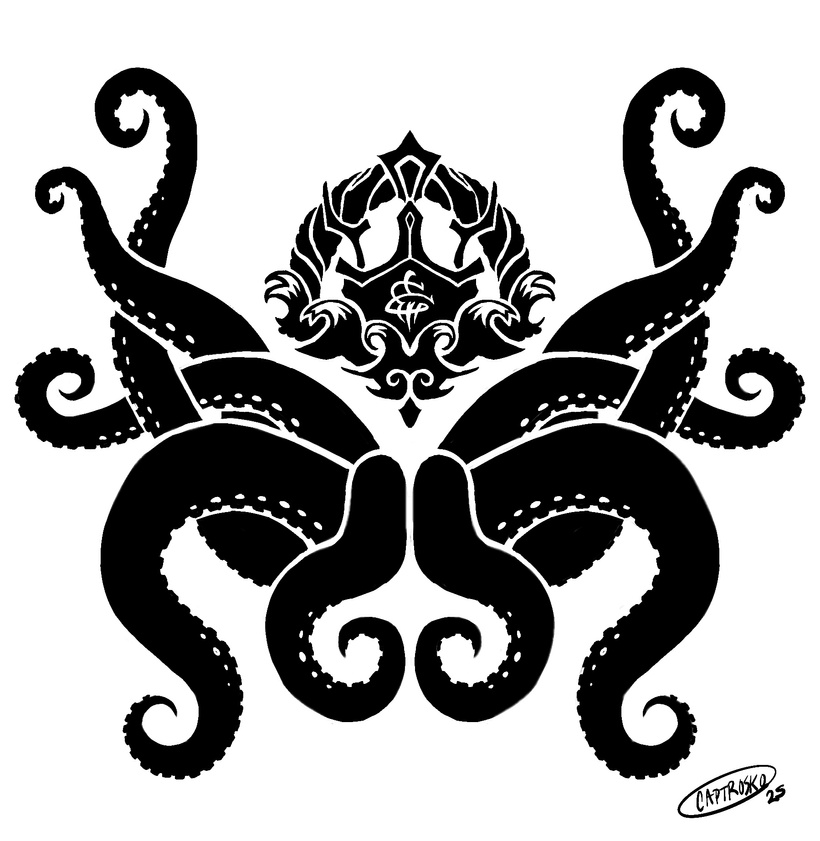
The crystal shows love Lyrandar. How many times have we seen a dashing Lyrandar captain facing off against pirates, dancing on the wind, landing blows with their rapier and rapier wit? That’s the story we’re sold—they’re daring, they’re bold. The House wants us to like them, to admire their adventurous spirit, to trust they’ll take us where we want to go. But just you look at the seal of the Windwright’s guild. You see the ship, riding the water or the wind. But around it and below it lies the Kraken, its tentacles reaching out to seize the world. Lyrandar has always been driven by ambition. They began with their feet caked in river mud, and now they’ve laid claim to the sky. I know, I know. You think I spend too much time reading the Voice of Aundair. But I tell you this: the sky won’t be enough for House Lyrandar.
There’s a storm inside of you. It was born when you first manifested your dragonmark, and it’s whirled within you ever since. Sometimes you want to move like the wind, to dance across the hall or dart through the rigging of a ship. Sometimes you want to let it out—to unleash your tension with a single clap of thunder, or to let it pour out of you in a massive gust of wind. There’s a storm inside of you, but only you know what it feels like. Is it cold and wet, full of ice and sleet, relentless hail that will wear down your foes? Or does the wind inside of you lift people up, catching you when you fall and shielding you from harm? What is the storm inside of you, and how do you reveal it to the world?
The Mark of Storms has gone through many changes over the editions. This article considers it in its latest incarnation, as it was presented in Unearthed Arcana and will appear in Forge of the Artificer. If you have the Mark of Storm, you have an intuitive bonus to Acrobatics and navigation. You have resistance to Lightning Damage. You know Gust of Wind and can cast it once per day without expending a spell slot… and you can cast the Thunderclap cantrip at will. These gifts are far more dangerous than the powers of most other Dragonmarks. A Cannith can mend, a Sivis can send messages, a Phiarlan can weave illusions. But your mark can flow out of you with explosive force. Every Lyrandar enclave has a fortified storm suite, where heirs are kept in isolation after manifesting the mark until they learn to control it; though an heir can go to the storm suite at any time if they just want to unleash their power without restraint, with no risk of hurting anyone. Due to this intensive training, Lyrandar heirs are very aware of their personal space—a Thunderclap strikes everyone within five feet. A trained heir runs no risk of accidentally unleashing their power, but releasing a Thunderclap is an exhilarating feeling and many will do it to accentuate a dramatic point to to express joy or anger; but again, they are careful to know when such an act could put innocents at risk.
House Lyrandar has always been driven by pride and ambition. A Lyrandar captain is the monarch of their own tiny kingdom, and considers themself to be the equal of any king or queen. From childhood, Lyrandar heirs are encouraged to dream big and to believe in their own potential. If you’re making a character who bears the Mark of Storm, consider how its power affects them. Do they love wild motion and dramatic displays? Or are they more akin to still water with hidden depths?
THE MARK OF WIND AND WATER
The spells of the Mark of Storm follow two paths. Feather Fall, Levitate, and Wind Wall are tied to the wind, while Fog Cloud, Sleet Storm, and Control Water are tied to water. While some exceptional heirs (including any player character) can draw on all of these powers, most Lyrandar heirs have an affinity for one or the other; thus, a typical Lyrandar NPC might be able to cast Feather Fall or Sleet Storm, but probably not both of them. The ability to conjure elementals is common to both paths, but heirs are usually only able to conjure the type of elemental associated with their affinity (Air or Water). Shatter is a focused form of Thunderclap and it’s something any Lyrandar heir can master with effort, but many don’t bother to do so; it requires an aggressive outlook, and heirs pursuing a peaceful life may not want to wield such power.
Conjuring Elementals. Where did the idea for the Elemental Galleon come from? Why was it associated with Lyrandar to begin with, if Lyrandar don’t bind elementals? The answer is that the heirs of House Lyrandar have been using elementals since the Mark of Storm first appeared—just in a far less efficient manner. The Lesser Mark of Storm allows the bearer to cast Conjure Minor Elementals. The Greater Mark gives access to Conjure Elemental. Lyrandar heirs quickly learned how to use air elementals to fill their sails and water elementals to propel larger vessels. However, doing this directly is a considerable effort for the heir manifesting the elemental and it lacks precision. The invention of the Elemental Galleon demonstrates the purpose of the Twelve: to combine the expertise of the Dragonmarked Houses to create things no house could create on its own. The first galleons still relied on a Lyrandar heir to produce the elemental, but channeled that spirit into ship systems—creating the iconic elemental ring. By working with the Zil, the Twelve made the breakthrough that led to the modern elemental vehicles—summoning an independent elemental that could be bound to the ship itself. Because the point is that when a Lyrandar heir conjures an elemental, it’s not coming from Lamannia.
When you conjure an elemental you’re drawing out the storm that lies within you; it is your spirit made manifest. Bear in mind that (under 2024 rules) when a Lyrandar heir conjures an elemental, it’s not an independent, sentient entity. Conjure Minor Elementals creates an emanation that radiates out from the heir, a storm that enhances their attacks. Conjure Elemental summons a “Large, intangible spirit” that doesn’t move once cast—a swirling storm core. It’s a manifestation of elemental power, not an independent entity. The key point is that the 2024 rules as written only describe the combat effects of these spells; but Lyrandar has developed focus items that can harness that elemental power to use it as motive force. It’s further the case that even though Lyrandar heirs don’t summon independent elementals, an heir’s relationship with their inner storm gives them an affinity for interacting with elemental forces… which is enhanced by the Wheel of Wind and Water, and which in turn is why airships currently rely on Lyrandar pilots for reliable control of the elementals.
Purely by the rules, someone who casts Conjure Elemental or Conjure Minor Elementals can draw on any elemental. Lyrandar NPCs should be limited to Air or Water. If a Dragonmarked player character is conjuring an elemental through the Mark, they should also be limited in this way. If they are a spellcaster using a spell slot to cast the spell, then they can call on any element; they may be guided by their Mark, but they are drawing on additional magic in casting the spell.
Storm Sorcerers and Lyrandar NPCs. Lyrandar NPCs are generally presumed to have a form of the Potent Dragonmark feat, granting them a single spell slot for each tier of their Dragonmark—Least (1st or 2nd level), Lesser (3rd or 4th level), and Greater (5th level). A typical heir is limited to either Wind or Water spells. Player characters with spellcasting ability have access to all of the Spells of the Mark and can use spell slots to cast those spells. Exceptional Lyrandar NPCs (including agents of the Hurricane Harvest) can have this same level of power, with the ability to cast all of the Spells of the Mark and to do so more than once per day per tier. Beyond this, Lyrandar spellcasters can choose to ascribe some or all of their spellcasting abilities to their Dragonmark. A Lyrandar Storm Sorcerer is an obvious candidate for this, but a Fathomless Warlock could say that their “patron” is their Mark itself. Under such circumstances, a DM could slightly reflavor existing spells to better fit the idea that they are tied to the dragonmark. For example, Lyran’s Shield is identical to Armor of Agathys, but inflicts Lightning damage instead of Cold damage. Storm of Selavash is a Fireball that inflicts Lightning Damage. The Aegis of the Firstborn is Fire Shield, but with the choice of Wind (inflicting and granting resistance to Lightning Damage) or Water (inflicting and granting resistance to Cold Damage).
Controlling the Weather. In the original 3.5 Eberron Campaign Setting, the Greater Mark of Making gave the bearer the power to cast Control Weather. The idea that Lyrandar had this ability was an important part of the house’s identity; the Raincaller’s Guild is a major part of its business. However, later editions balked at this, with Rising—and now, Forge of the Artificer—granting Conjure Elemental in place of Control Weather. From a design perspective, there’s two solid reasons for this. In Fifth Edition, Control Weather is an 8th level spell. The 3.5 ECS didn’t care that the Mark of Storms had access to a spell higher level than that of most Greater Dragonmarks. But the “Spells of the Mark” approach to Dragonmark powers doesn’t support giving a character access to an 8th level spell. And there’s a second important reason: Control Weather isn’t that useful to a typical adventurer. In either of its 5E forms, Conjure Elemental is a spell with clear value in an encounter. Control Weather is a highly situational spell that has a lot of flavor and story potential—but which is likely to be useless in a typical dungeon crawl. So I understand the rationale behind this switch. Nonetheless, the lore of House Lyrandar is based on the idea that they can control the weather. Rising From The Last War sought to bridge this by introducing the Storm Spires: Eldritch machines that allow Lyrandar heirs to control the weather around the Spire. I think the Storm Spire is great: in my campaign, a Storm Spire amplifies and expands the power of the mark, controlling weather over a wider area and for an indefinite duration. It’s an excellent tool for a large community with an established Lyrandar presence. But I still want the traveling Raincaller who can come to your farm during a drought and turn things around. With this in mind, in my campaign I’m implementing the idea that controlling the weather is a specialization within the house. Some heirs learn to externalize the storm they hold within; if they develop the Greater Dragonmark, they have the ability to cast Conjure Elemental. Others—those that emulate the still water with hidden depths—learn to manipulate the storms around them rather than to unleash the storm within. Those that follow this path replace Conjure Elemental on the Spells of the Mark list with Control Weather. They are able to cast Control Weather once using a 5th level spell slot, and regain the ability to do so after they complete a long rest; otherwise, they can cast it using an 8th level spell slot. So, Raincaller NPCs with the Greater Mark of Storm can control the weather; if a Lyrandar adventurer wants this power, it comes at the expense of Conjure Elemental.
FOCUS ITEMS
Lyrandar heirs regularly employ the focus items described in Exploring Eberron—Dragonmark Channels and Reservoirs. Exploring Eberron mentions Storm’s Embrace, a focus item that duplicates the Ring of Feather Falling. In general, any item that deals with wind or water can be reframed as a Lyrandar focus item. Here’s a few additional focus items. The Hurricane Cloak is beloved by Lyrandar swashbucklers. The Windwright’s Anchor and Raincaller’s Crown are tools used by members of the Lyrandar guilds. The Windwright’s Anchor is a key tool for Lyrandar riverboat captains, who fill their sails with Gust of Wind, while the Raincaller’s Crown allows a wandering Raincaller to maintain a shift in the weather for a full day—and to go indoors after casting the spell. Scepters of the Firstborn are rare weapons treasured by champions of the Hurricane Harvest.
Hurricane Cloak
Wondrous Item, uncommon (requires attunement by a creature with the Mark of Storm)
While wearing this cloak, you can take a bonus action to make it billow dramatically for one minute. You can take a Magic action to catch the wind within the cloak, lifting you just off the ground. While the cloak remains active, you have a Fly speed of 40 feet and can hover. You must maintain concentration to sustain this flight, as if you were concentrating on a spell. The cloak keeps you aloft until you end your concentration.
Windwright’s Anchor
Wondrous Item, uncommon (requires attunement by a creature with the Mark of Storm)
This amulet enhances the powers of the Mark of Storm. When you cast Gust of Wind, Fog Cloud, Wind Wall or Conjure Elemental, you can use the Anchor to enhance the duration of the spell. This requires intense focus and ongoing concentration. While using the Anchor in this way, you are Restrained. In addition, you must use an action on each of your turns to maintain the effect. As long as you do so, you can maintain the spell effect indefinitely.
Raincaller’s Crown
Wondrous Item, uncommon (requires attunement by a creature with the Mark of Storm)
When you cast Control Weather, you can maintain concentration on the spell for up to 24 hours. You must be outdoors to cast the spell, but it doesn’t end early if you go indoors after casting it. When you end concentration, the weather you have created continues for eight hours before fading.
Scepter of the Firstborn
Rod, Rare (requires attunement by a creature with the Mark of Storm)
This rod has 7 charges and can be wielded as a mace.
Mighty Thunder. If you cast Thunderclap while holding the Scepter, the damage is increased by 1d6 and the saving throw DC is increased by 2.
Storm Unleashed. While holding the Sc epter, you can expend up to 3 charges to cast Lightning Bolt (Save DC 15) from it. For 1 charge, you cast the level 3 version of the spell. You can increase the spell’s level by 1 for each additional charge you expend.
Regaining Charges. The Scepter regains 1d6+1 expended charges daily at dawn.
THE HISTORY OF HOUSE LYRANDAR
The Mark of Storm first appeared two thousand years ago, manifesting in communities on the banks of the River Aundair. According to the sages of the house, the mark first manifested on two half-elves. Lyran lived in Daskara, in the slums of the city of Daskaran. His ancestors were elves of Aerenal who had married into Daskaran families, but elf and human alike had no love for their hybrid children. Selavash was one of the so-called “River Elves” of Thaliost, descended not from Aerenal but rather from elves who had emerged from the Towering Wood. At that time, the River Elves were itinerant families with few shared traditions. They were often unjustly depicted as criminals and vagrants, scapegoated for whatever troubles a community might be suffering from. It was in this bleak landscape that Lyran and Selavash—so the records say—received a vision from the Sovereigns Arawai and Kol Korran. You are true children of Khorvaire, Arawai told them both. Take our blessing, Kol Korran said, and take your rightful place in this world. As others might saddle a horse or yoke a tribex, you will harness the wind and the water. Take this gift and prosper.
These are the stories of House Lyrandar, and none can say if they are entirely true. But what happened next is historical fact. Lyran and Selavash joined forces and traveled up and down the River Aundair, recruiting downtrodden half-elves and sharing their stories. It was Selavash who coined the term Khoravar. Both humans and elves came from distant lands, she said. We aren’t half a thing. We are the true children of Khorvaire, born and beloved by the land itself. Their message and their miracles—the wonders they performed with their Dragonmarks—quickly gained them a following. Not all of their cousins joined them, from either side of the river. The powerful priests of Daskara condemned Lyran and Selavash as heretics and servants of the Six, cursing any who proclaimed themselves Khoravar. In Thaliost, many of the fractious River Elves dismissed Selavash due to old vendettas or stubborn independence. But the Khoravar slowly increased in number, guided by the leaders that they called “the Firstborn.”
The concept of Khoravar identity was something that spread across the land farther than the Firstborn themselves. Lyran and Selavash made no demands on the Khoravar, merely encouraging them to embrace their identity and to build a culture together. But the Firstborn were there at the heart of the movement, as was the Mark of Storm. Lyran and Selavash recruited anyone they could find with the Mark, urging them to use the blessing to build a foundation for the Khoravar— a business that would give them leverage within the world. Selavash organized a corps of dragonmarked sailors, teaching them to fill sails with summoned wind or to propel vessels with manifested water spirits. And Lyran gathered those who could sense the currents of the storms and taught them to control the weather. The first decade was hard, as the Firstborn struggled to find heirs and to fight against Daskaran oppression. But in time, the people of the region began to appreciate the services these Windwrights and Raincallers could provide. House tales say there was a time when Selavash and her children were brought before the priests of Daskaran in chains, accused of being servants of the Shadow and vessels of fiends… but that Selavash stunned her accusers with the wisdom of her words and her proof of Arawai’s blessing, and that from that day forward her family flourished.
According to House legends, the Firstborn never died. When they grew old, they took a boat to what is now known as Scion’s Sound, accompanied by their most accomplished Windwrights and Raincallers. What success we have is but a fraction of what you have been promised, Lyran said. It is time to move beyond the river, to claim the oceans. We will always be with you. And with these words, Lyran and Selavash dove into the waters of the Bitter Sea and were never seen again. By this time, the concept of the Khoravar was widespread across Daskara and Thaliost. The members of the inner circle who had accompanied the Firstborn to the sea were drawn from across both of these regions. But then and there, they declared that they would all be known as the children of Lyran—the Lyrandar.
Lyrandar Rises. In the century that followed, the Lyrandar extended their reach beyond their homelands and across Khorvaire. Propelled by elemental power, Lyrandar vessels were faster and more reliable than any mundane vessel. Some say the early Lyrandar called up storms to sink rival merchants and sailors; House records say that “In those days the Devourer was hungry, but the blessing of the Firstborn shielded us from his wrath.” Whatever the truth, the Lyrandar were soon recognized as the most reliable ships on river or sea, whether serving as merchants or couriers. They carried the concept of the Khoravar with them. Many half-elves sought to serve on Lyrandar vessels, but even those who had no interest in this embraced the Khoravar name. As the War of the Mark began to brew, the leaders of other powerful Dragonmarked families curried favor with Lyrandar, drawing them into the union of the “True” Dragonmarked. The Lyrandar were pleased to have their power recognized and willingly joined this alliance. They provided logistical support during the War of the Mark, and in its wake they proudly joined the Twelve as House Lyrandar.
The Duel of Storms. House Lyrandar prospered in the ensuing centuries, but the leaders of the House always yearned for more. The most infamous chapter in Lyrandar’s history is known as Gravan’s Grasp. While Galifar Wynarn was waging his war of unification, Patriarch Gravan d’Lyrandar invaded the island of Orthoss, proclaiming his intent to bring all of the eastern islands under the Kraken banner. Galifar met with the leaders of the Twelve in the city of Korth, warning them that he sought to bring unity to Khorvaire and that the Twelve could be woven into the tapestry of his united kingdom, or they could be an obstacle in his path. The majority of the houses saw great potential in Galifar’s vision—a future in which they wielded unparalleled economic power—and they demanded that Lyrandar abandon its territorial ambitions and withdraw from Orthoss. When Gravan refused to comply, Cassala d’Lyrandar defeated him in a duel fought on Orthoss itself. The stories say they fought with lightning and wind, and that their battle devastated the port of Blackrock. Under Cassala’s leadership Lyrandar withdrew from Orthoss. Cassala’s courage won her Galifar’s favor, and the house grew close to the crown. Eventually—in 347 YK—House Lyrandar was granted an indefinite lease to the island of Stormhome. While in theory this lease could be revoked, Lyrandar has transformed the island and it is effectively a city-state under Lyrandar rule.
Elemental Engines. The Twelve exists to ensure the mutual prosperity of the Dragonmarked Houses. The Elemental Galleons were one of the first great fruits of this union—something that no one house could produce alone, which provided a huge benefit to Lyrandar. Initially, elemental engines simply focused the powers of Lyrandar heirs; an heir with the Greater Mark of Storm would have to manifest the elemental. It was House Sivis that proposed the alliance with the binders of Zilargo that produced the modern Elemental Galleons—and paved the way for the Airship.
Lyrandar in the Last War. Initially, Lyrandar sought to maintain its mercantile operations during the Last War, engaging solely in civilian shipping. While Lyrandar vessels could be stopped and searched, the rules of engagement established at the beginning of the war forbade any nation from seizing legitimate cargo or damaging their vessels. As the war continued, Lyrandar worked with Deneith to broker the services of mercenary warships, troop transportation, and to explore the martial application of Lyrandar Raincallers. Over time, two developments would change the shape of the house forever. The development of the Elemental Airship has unlocked countless opportunities for House Lyrandar, and the House is pouring resources into producing airships and docking towers, expanding its routes and reach. The second major shift is less obvious in the Five Nations, but is just as significant to the future of the house. In 956 YK the Tairnadal elves seized eastern Cyre and declared it the nation of Valenar. But the needs of a nation are quite different from those of an army, and the Tairnadal were soldiers, not bureaucrats. Lyrandar saw a void and flowed into it. Lyrandar shipping was vital for supplying the isolated new nation. Beyond this, Lyrandar provided the civilian infrastructure the Tairnadal lacked—providing mediators, administrators, and other crucial assistance. The House has supported the immigration of Khoravar to Valenar, helping to build a role for their people beyond the services provided by Lyrandar itself. High King Vadallia may wear the crown of Valenar, but it is well on its way to becoming the Khoravar nation Gravan dreamed of in the days before Galifar.
What Happens Next? Lyrandar has always been ambitious, and there are lots of opportunities on the horizon.
- Air Power. Air travel is still in its infancy, and Lyrandar wants to expand and capitalize on it as quickly as possible. This means building new ships—something that could require them to find an alternative to Aereni soarwood in order to meet the demands of the growing fleet. It means building docking towers in cities and towns—something that could be sabotaged by agents of House Orien or locals convinced the towers are tied to some nefarious plot. It means the continued evolution of airship design, with the potential development of luxury vessels or aerial warships. And it raises the question of how far Lyrandar, Cannith, or the Twelve will go to preserve Lyrandar’s current monopoly on the skies, should some other faction develop a viable, widespread form of air travel. Why does this matter for player characters? Adventurers could be brought in to help test experimental airships, or simply find themselves onboard as passengers. They could be caught in the crossfire when someone seeks to sabotage a docking tower. If Lyrandar turns to the Eldeen Reaches in search of an alternative to Aereni soarwood, adventurers could be hired to delve deep into the Towering Wood in search of rare lumber. They could have to protect Lyrandar interests from Ashbound druids—or they might find themselves on the side of the forest, protecting the Wood when Lyrandar starts destructive logging operations.
- Valenar. House Lyrandar is working to embed the Khoravar in the fabric of Valenar. But Valenar has an uncertain future. Part of the reason the Tairnadal are content to let Khoravar run the nation is because they have no long-term interest in nation building; ultimately, they want war. Sooner or later, their ongoing provocation of other nations might bring that war to Valenar. Alternatively, the elves might tire of the gambit and simply leave Valenar. Either option could spell disaster for Lyrandar’s ambitions. Lyrandar or not, any Khoravar adventurer could have ties to Valenar; if you have family in Taer Valaestas, the outbreak of war could be a greater concern.
- House Orien. Lyrandar’s conquest of the air threatens Orien’s dominance of overland travel. How far might the Unicorn go to defend itself against the Kraken? Adventurers could be drawn in on either side of this conflict, or just caught in the crossfire.
- The Hurricane Harvest. Described in more detail in the following section, the Hurricane Harvest are extremists who believe that the Mark of Storm is a divine gift—a gift intended to be used as a weapon. Members believe that the Firstborn guide them through dreams, which could make them easy pawns if the Dreaming Dark has a use for them. Lyrandar Harvesters could be part of an isolated threat, unleashing a devastating storm in a small town or sinking ships at sea. Or they could be part of something grander, triggering war in Valenar or even hoping to fulfil Graven d’Lyrandar’s ancient dream of conquering the Lhazaar Principalities.
THE STRUCTURE OF THE HOUSE
Lyrandar is spread across Khorvaire. Almost every city or town with a port has a Windwright outpost, where people can book passage or freight transport. Raincaller outposts are found in the hub cities in agricultural regions. While its guild outposts are everywhere, Lyrandar only has a few major enclaves where heirs are raised and live… Although one of these is the largest territory held by any Dragonmarked House within the Five Nations. These are the most notable outposts of the house.
Stormhome (Aundair). Over the course of centuries, Stormhome has become a flourishing city and a hub for commerce. Due to its neutrality it was a nest of intrigue during the Last War; it is also celebrated as a vacation destination, and House Ghallanda maintains a number of resorts for wealthy patrons. Lyrandar heirs live throughout the city of Stormhome, and there are a number of important sites. Slate Keep is the trade school that trains Lyrandar sailors. Dolmaen Yard is a shipyard that maintains Lyrandar vessels and builds Elemental Galleons. The Tower of the Firstborn is a glorious shrine dedicated to Arawai and Kol Korran, as well as to the founders of the House. Kraken Keep is the seat of the Matriarch. The latest addition to the skyline of Stormhome is The Pole—the largest airship docking tower in Khorvaire, which incorporates an arcane workshop where the Raincallers plumb the potential of the Mark of Storm.
The Old Harbor (Daskaran, Thrane). This was Lyrandar’s stronghold from its earliest days, and its shipyards specialize in the construction and maintenance of river boats and barges. The Old Harbor predates the rise of the Church of the Silver Flame (and of Thrane itself!), and while there’s always a handful of Lyrandar heirs drawn to the Church, most remain true to their traditions—celebrating the blessings of the Sovereigns and the wisdom of the Firstborn.
Lyrandar Tower (Sharn, Breland). As the gateway to Xen’drik and a center for commerce, Sharn is an important hub for House Lyrandar. The Windwright’s Guild has extensive holdings along the river, but the House itself has an enclave in Highest Towers in Upper Central… and Lyrandar Tower is indeed one of the highest towers in the city. For centuries, Lyrandar tower housed heirs of the house and was a seat for diplomacy and business dealings. Over the course of the last ten years, it has undergone dramatic changes. Lyrandar Tower is Sharn’s airship dock, and the top levels of the tower have been repurposed to support the traffic this brings; Lyrandar has brought in a variety of outside businesses. House Deneith has an outpost in the tower, providing visitors with immediate access to bodyguards while also providing security for the tower itself. The Silverstreak Skycoach Company is now based in the tower. Dining options include The Noble Wyvern (luxurious and expensive), The Royal Brelish (a tribex steakhouse), The Hideaway (a classy tavern that might have connections to the Boromar Clan) and of course the ubiquitous Gold Dragon Inn.
Falconer’s Spire (Stormreach). While House Lyrandar has always done business in Stormreach, for much of the city’s history the Harbor Lords prevented the House from establishing a strong foothold. That’s changed over the last 30 years. Falconer’s Spire is both an enclave of the house and an airship docking tower, and Lyrandar is currently building a shipyard. It’s said that Calynden d’Lyrandar, the head of the enclave, hopes to wrest new secrets of elemental binding from the depths of Xen’drik, reducing Lyrandar’s dependence on Zilargo.
Valenar Holdings. Lyrandar has been entwined with Valenar since the founding of the nation. While Lyrandar has a significant outpost in Taer Valaestas, that city celebrates its identity as the seat of the High King and is dedicated to supporting the Tairnadal. Lyrandar heirs serves as administrators, magistrates, stewards and more, but the city is focused on the Tairnadal. This is the hub for the roving warbands, and smiths, farriers, and magewrights support the needs of the elves. Pylas Maradal is another story. Located on the southwestern coast of Valenar, this city has long been a crucial port of trade between Aerenal and Khorvaire. After seizing control, the Tairnadal have largely ceded the city to House Lyrandar. There is always a warclan in residence, but the Tairnadal care nothing for the sea or commerce. Today, Pylas Maradal has two functions. Over the last few decades the House has been expanding the shipyards, and Maradal is the primary facility for the construction of Elemental Airships. Airships require soarwood from Aerenal, so the proximity to the island is useful. Beyond this, the relative isolation of the port—far from the heart of the Five Nations—was useful as Lyrandar was conducting its early work. Raincallers have established Storm Spires around Pylas Maradal and brought rain to the desert; the lands around the city are now the breadbasket of Valenar. Finally, Pylas Maradal is home to Sela’s Doctrine, a school that trains Lyrandar heirs (largely unmarked) in diplomacy, mediation, and the skills required to serve as stewards and administrators elsewhere in Valenar. Pylas Maradal isn’t as grand as Stormhome, but it is where Lyrandar is laying the groundwork for a Khoravar nation. Beyond just the heirs of the house, Pylas Maradal welcomes all Khoravar immigrants, and has programs supporting Khoravar artists and artisans; the Seneschal Haela d’Lyrandar wants Maradal to become a center for Khoravar culture.
Lyrandar culture is built around the Windwright’s Guild and the Raincaller’s Guild, and most heirs of the house grow up dreaming of joining one or the other. However, the house maintains a number of institutions that exist independently of the guilds, including Sela’s Path, Lyran’s Gift, the Stormwalkers, and more. This section explores each of those institutions.
The Windwright’s Guild
The Windwright’s Guild has managed shipping across Khorvaire since before the rise of Galifar. This includes passenger ships and dedicated cargo vessels. To get a proper picture of the Windwright’s Guild, it’s important to understand the different levels of guild membership.
- Licensed captains own their own ships and choose their own course. Their ships are regularly inspected to ensure that they meet guild standards, and they are monitored to ensure that they are reliable. Hire a vessel with the Kraken silhouette and you know the captain will charge a fair price and do their best to complete the journey as promised. In exchange, a licensed captain gives 5% of any profits made from their vessel to the Windwright’s Guild. The guild is always happy to broker the services of a licensed ship if the captain is looking for passengers or cargo, but it makes no demands.
- Bound captains sail ships that have been provided by the Windwright’s Guild, and they follow the course and schedule set for them by the guild. This is an opportunity for young captains who didn’t inherit a ship, but the house takes 10% of all proceeds, sets the path the ship must follow, and can reclaim the vessel at any time. Bound vessels display the Kraken seal in silver. As servants of the house, bound captains are kept on a tighter leash; the house won’t condone smuggling or any other questionable activity.
In most Dragonmarked Guilds, it’s possible to find bound businesses that aren’t run by house heirs. Not so with Lyrandar. Any would-be captain can obtain a Lyrandar license, provided they have a sound ship and prove themselves reliable. But every bound vessel has a Lyrandar captain and a number of Storm heirs among the crew—because it’s the gifts of the Dragonmark that give the guild its unbeatable edge. Elemental Galleons and Airships are require a Lyrandar captain, and smaller vessels rely on a pilot using a Windwright’s Anchor to fill the sails with wind, or conjuring an elemental to directly propel a ship. The crew of a bound vessel is usually a blend of young marked Lyrandar heirs and seasoned unmarked heirs and non-house Khoravar whose experience and expertise are almost as valuable as the Mark of Storm. Licensed vessels have no restrictions on captain or crew. Many Lyrandar heirs prefer the independence of owning their own ships, even if they spend most of their time working for the guild. Licensed captains often pass their ships on to one of their children when they retire; there are a handful of Elemental Galleons that have been in service for over a century.
Sailors in the Windwright’s Guild are assigned to one of three paths—River, Sea, or Air. While it’s possible to shift paths, most heirs have a preference and hold to that. Air travel is still in its infancy, and Air sailors like to present themselves as the stars of the guild, carrying the House into the future. Each branch of the guild has a distinct symbol, as seen within this article; so when meeting a Lyrandar captain, as long as you know what to look for, it’s easy to spot. While sailors on bound vessels are typically Lyrandar heirs (marked or otherwise), the Windwright’s Guild also employs countless dockworkers, shipwrights, carpenters, and more. While these people don’t have to be Lyrandar heirs, the house strives to hire Khoravar whenever possible.
The Bounty Division is the final branch of the Windwright’s Guild. Air, Sea, and River work on the wind and water. The Bounty Division manages logistics, shipping schedules, and deals with ship and canal construction and maintenance. Beyond this, it handles the house’s investments—always looking for what it can transport in pursuit of profit.
SIDEBAR: RIVERS AND TOWNS
The canon maps of Eberron are high level maps intended to convey the basic shape of things and to highlight the most important cities and a handful of interesting destinations for adventurers. This prevents the maps from having an overwhelming level of detail. But the fact is that the Five Nations should have hundreds of villages and towns, and that there should be more rivers and roads connecting them. When I wrote Frontiers of Eberron: Quickstone—zooming in on a smaller region—I added more detail to the region. I decided that the reason Ardev was the largest town was because it was on a waterway and by a lake. And given this, you can be sure that Lyrandar runs boats along the river from Ardev to Castle Arakhain, and supplies the villages along Chalice Lake. You should feel free to do the same. We’ve always said that you should make Eberron your own. Don’t be afraid to add more detail to the map when you zoom in on an area! Frontiers of Eberron includes a set of tables for generating random villages, to help with this process. The reason this matters here is because running the rivers is an important part of Lyrandar’s business—because there are more rivers and towns than shown on the basic map.
The Raincaller’s Guild
House Lyrandar is celebrated for its ability to control the weather. Lyrandar Raincallers employ this gift for profit—ending droughts, dissipating hurricanes, and ensuring the weather meets the needs of its clients. Individual traveling Raincallers can offer a temporary shift to a community, but the house can make permanent, wider changes to regional weather by employing Storm Spires and similar tools. However, controlling the weather is only one of the services provided by the guild. Raincallers seek to harness the forces of nature for the good of the people, and they do this through means both mundane and magical. Irrigation systems, waste management, dams, canals, reservoirs—the engineers of the Raincaller’s Guild can advise and assist on the construction of all of these things. Livestock and animal husbandry are the domains of House Vadalis, but when it comes to harnessing the potential of sky and soil, the Raincallers are ready to help… for a healthy profit, of course. It’s worth noting that Lyrandar techniques are quite different from those employed by the people of the Eldeen Reaches and Towering Wood. Much like House Vadalis, the philosophy of the Raincallers is that the Mark of Storm grants them dominion over nature. While some gain the ability to cast Druid spells through their Dragonmarks, the overall outlook of the Raincallers is more Industrial than Primal. The Wardens of the Wood say that Lyrandar’s long-term manipulation of weather patterns will eventually have disastrous consequences, and that some of the most dramatic natural disasters in the history of the Five Nations may have been unintentionally set in motion by Lyrandar meddling. The upshot of this is that farmers in the Five Nations often employ Raincaller services, but that there is no love lost between Lyrandar and the people of the Eldeen Reaches. Ashbound druids have been known to be especially hostile to Lyrandar raincallers. For their part, the Raincallers assert that their techniques work and dismiss the notion of any sort of “butterfly effect” resulting from their manipulations.
Overall, the Raincallers are trusted service providers. However, there have long been rumors of “weather extortion.” A Raincaller arrives and tells the mayor of a town that the power of the Devourer is building, and that a massive storm will threaten the town in a few days; the Raincaller could stop it, but it will take time and energy, and he’ll have to be compensated for both. Perhaps—as the Raincaller’s Guild insists—such warnings are entirely legitimate and sincere. Or perhaps there is no danger of a storm… unless the Raincaller is sent away angry, at which point they will cause the threatened storm. The DM will have to decide if there’s any truth to this, or if these are just scurrilous rumors.
The Raincaller’s Guild is a profitable business for House Lyrandar, but doesn’t catch the public eye in the same way as Elemental Galleons and Airships. The guild is smaller than the Windwright’s Guild, and when people think of Lyrandar, they think of its ships. Nonetheless, the guild Raincallers shift weather, but they typically don’t strike enemies with bolts of lightning. As such, Raincallers were rarely present on the battlefields of the Five Nations… but they were often adjacent to them. Raincallers could ensure a traveling army would have perfect weather for a journey, create fog to conceal forces, and a host of other useful effects.
Sela’s Path
House Lyrandar has its own religious tradition, grounded in the Pyrinean interpretation of the Sovereign Host but with its own unique customs and rituals. Sela’s Path maintains that the Mark of Storm is a blessing from the Sovereigns Arawai and Kol Korran. Beyond this, Sela’s Path maintains that the Firstborn—Lyran and Selavash, the founders of the house—continue to serve as spiritual intermediaries between the Khoravar and the Sovereigns, just as Tira Miron is said to be the Voice of the Flame. While priests of Sela’s Path work to guide and assist House Lyrandar, they are also devoted to the Khoravar as a whole. Over the last few decades Sela’s Path has sent many of its priests to Valenar, working to entrench their shrines into the foundation of the evolving nation and to support Khoravar immigrants. If you want to play a Cleric of Sela’s Path, the Tempest and Nature Domains are both logical if you are using legacy content; otherwise the Life Domain fits the generally benevolent direction of the Path. When playing such a Cleric, consider if you believe you receive visions from one of the Firstborn. Have you been given a specific mission, or are you simply working for the greater good of your House and your people?
Lyran’s Gift
Lyran’s Gift is the arcane research division of House Lyrandar, devoted to finding new ways to channel the power of the Mark of Storm. While the Elemental Airship is a product of cooperation within the Twelve and with Zilargo, the artificers of Lyran’s Gift have been working on modifying airships—experimenting with lightning turrets and stronger wind wards. They are exploring ways to increase the power of Storm Spires, but also developing techniques for individual heirs to channel the power of the Mark—techniques that might be employed by a Lyrandar Storm Sorcerer. Throughout its history, collaboration with the Twelve has been vital to House Lyrandar… but there are always those in Lyran’s Gift who dream of breaking Lyrandar’s dependance on Cannith and Zilargo. As a Lyrandar Artificer, Sorcerer, or Wizard you could be a roving member of Lyran’s Gift. Are you searching for something in particular on your adventures? Are your spellcasting abilities experimental techniques for channeling the power of your Dragonmark? Or were you politely sent out into the field after causing a terrible tempest in Lyrandar Tower?
The Stormwalkers
The Stormwalkers are a small corps of elite operatives that serve House Lyrandar. Members are drawn from all of the branches and guilds, and they typically maintain cover identities; a Stormwalker might be a licensed Sea captain, a wandering Raincaller, or a missionary of Sela’s Path. Stormwalkers are employed when the House has objectives that violate the laws of Galifar or the neutrality of House Lyrandar; if they are exposed during these missions, they will be disavowed and condemned by the Matriarch. During the Last War, the Stormwalkers often engaged in smuggling missions—taking arms shipments past blockades, helping fugitives and spies escape from enemy territory, and similar actions. Lyrandar maintains a small fleet of submersible elemental vessels, and these are often assigned to Stormwalker missions. As a Lyrandar adventurer, you could be a former Stormwalker—perhaps disavowed by the House when your mission went terribly wrong! Or you could be a current Stormwalker, pursuing the life of the adventurer as a cover while you wait to be assigned your next mission.
The Hurricane Harvest. There is a malevolent force within House Lyrandar, a sect that celebrates the Mark of Storm as a tool of destruction. It has had many names, and time and again it has been rooted out and eradicated by Sela’s Path and destroyed… but time and again it has rebuilt itself in the shadows. Today this sect is known as the Hurricane Harvest. Its devotees say that the Firstborn weren’t blessed by Arawai and Kol Korran; they were chosen by the Devourer and charged to unleash the fury of the storm upon the world. The Hurricane Harvest claims that Lyran and Selavash are still alive—that they transformed into krakens when they leapt into the sea, and that they guide the sect from the depths. Members believe that if they can master the destructive powers of their dragonmarks, they too can one day become immortal kraken lords. Devotees of the Hurricane Harvest believe that House Lyrandar should rise to dominate all of Eberron. On a small scale, they believe in using the destructive powers of the Mark of Storm to sacrifice victims to the Devourer; any act of destruction is thought to earn his favor. So a cult of the Hurricane Harvest could be encountered hunting Wind Whisperer pirates or taking some other action that serves the good of the house and seems reasonable enough; but they might then turn around and launch a tsunami at Blackrock, or even try to bring down the towers of Sharn. Ultimately, their goal is to revel in the destructive powers of nature… dreaming of a day when Khorvaire is in glorious ruins, the waters rise, and the krakens reach up and seize the sun.
LYRANDAR CUSTOMS
Lyrandar love whirling movement and dramatic action. Thunder and lightning are in their blood. When Orien are move in order to reach a destination, Lyrandar move for the sheer joy of it, loving to spin and leap. Dance is an important part of any Lyrandar gathering. The Thaedira (“Wind Dance”) is a dance for two that is equal parts celebration and duel. While it is wilder in its motions, the rules for the Cyran Tago can be used to resolve dancing the Thaedira. Duels are likewise a common part of Lyrandar life. Any duel begins with the thunder: the dramatic proclamation of grievances, playing to whatever crowd there might be. This is followed by the lightning, the clash of blades. Lyrandar appreciate finesse over force, and love to see shows of skill. While duels are common, they are typically only fought to first blood; the show of the duel is as important as the outcome.
The Unity Meal is a tradition that began among the Khoravar of Wroat. It has been adopted by the Khoravar of House Lyrandar, but with a few twists. In Medani communities, Khoravar are encouraged to bring friends to a Unity gathering, regardless of whether or not they are Khoravar. Lyrandar meals are more exclusive. Any Khoravar is welcome to attend… but only Khoravar are welcome to attend. Lyrandar Unity Meals also tend to be more boisterous than their Medani counterparts. Rather than just sharing news, guests are expected to tells stories and to trumpet their recent triumphs. And we may be celebrating our unity, but would it really be a meal without at least one duel?
Another notable fact is that Lyrandar love to talk about the weather. Dragonmarked heirs can feel the currents of the wind in ways that others can’t. While one might think a Raincaller who can control the weather might have literal interest in discussing it, for a Raincaller weather patterns are like fine wines.
LYRANDAR FAMILIES
House Lyrandar is proud of its Khoravar heritage and its customs are more restrictive than those of other houses. All species are welcome in the house guilds, but only Khoravar can join the house itself. Over the centuries, five families have become the heart of the house. The descriptions below provide a few traits that describe a typical member of each family. However, it’s important to remember that this is typical; player characters don’t always fit the standard mold. This is especially true in the character examples given. The Deepwater family is KNOWN for its fighters, but a Deepwater adventurer could be a Bard or a Sorcerer. These suggestions are just that, helping to convey the flavor of each family.
DEEPWATER
Historical Role: Coastal fisherfolk and sailors
Primary Areas of Influence: Windwright’s Guild (Sea)
Common Traits: Curious, Dreamers, Love of the Ocean
Deepwater was a fishing town on the northern coast of what’s now Aundair. As Lyrandar took shape, Deepwater became the focus of its saltwater ambitions. It was here the house built and launched its first (mundane) galleons. The town itself was abandoned with the rise of Stormhome, but the people of Deepwater united into one family, which has persisted as a major force in the house to this day. Deepwater heirs almost always go to sea. Some are content to spend their lives on bound vessels, serving the greater needs of the house, but most dream of owning their own ships. This is part of the common character of Deepwater. Like many Lyrandar, they are bold and dramatic. But Deepwaters are known as dreamers, always imagining what wonders might lie over the horizon and what grand adventures lie ahead of them. Another common trait of the Deepwater is a powerful love of the open water. It’s said that A Deepwater captain would rather face a storm on the water than spend a sunny day in Sharn. The Deepwater family has its deepest roots in Stormhome, but most of its heirs take to the sea as soon as they can and spend their lives there; which also means that Deepwaters can be found in the taverns of any sea port town.
Deepwater Characters. Deepwaters are bold and strong. Of all their kin, they are the most likely to face pirates and other threats over deep water. As such, the iconic Deepwater character is a Fighter. There’s two common paths Deepwaters follow. One is to master the power of the Mark of Storm, striking enemies with steel and Shatter. This is the path of the Eldritch Knight. While an adventurer can learn any Wizard spell, most NPCs in this model will only wield Spells of the Mark or thematically related magic. However, Deepwaters also recognize the importance of leadership, and a Deepwater captain might follow the path of the Battle Master. Whatever their specialty, Deepwater Fighters are still swashbucklers that fight at sea; as such, they typically prioritize finesse over force and prefer light armor.
Whatever your class, as a Deepwater character the most important question is why aren’t you at sea? Are you being punished? Has a mentor promised to help you get your own ship if you do a few jobs for them first? Are you pursuing revenge—hunting an enemy you’ve sworn to put in the ground before you return to water?
Notable Deepwaters. Alistair d’Lyrandar is a respected sea captain known for surviving multiple engagements with pirates in the Lhazaar Sea. While he loves the water, the Matriarch Esravash charged him to take to the air and serve as the captain of the Golden Dragon, the largest airship the house has produced. Originally conceived as an aerial battleship, the Golden Dragon has been repurposed as a luxurious cruise ship, “Stormhome in the Sky.” Alistair is a capable captain, but no one’s ever seen a ship like this before; can he handle the chaos that surely lies ahead?
Talavash d’Lyrandar is a bold Eldritch Knight who battles foes with storm and steel. She’s not bound to a single ship; instead, she accompanies vessels carrying precious cargo or passing through especially dangerous waters. Her heroic deeds have earned her considerable coverage in the chronicles, and Phiarlan is producing a crystal show based on her exploits. Talavash could be an ally when adventurers are on a dangerous voyage—but she doesn’t want anyone stealing her spotlight.
SOLON
Historical Role: Shipwrights, Masons
Primary Areas of Influence: Windwright’s Guild (Bounty), Raincaller’s Guild (Irrigation)
Common Traits: Stoic, Morose, Practical
While dramas like to focus on Lyrandar’s captains, a captain is nothing without a ship. The Solon family are the unsung heroes of House Lyrandar, its master shipwrights and masons. While Solons can be found at every Lyrandar shipyard, the family has its roots in the Old Yard of Daskaran. In recent centuries Solon has worked with House Cannith to streamline production and to incorporate the arcane systems of elemental vessels, but Solon expertise is still a key element of Lyrandar vessels. However, not all Solons work on ships! The Solon family has also played a major role in the development of lock and canal systems, as well as the implementation of the irrigation systems developed by the Raincaller’s Guild.
Some like to say that the Solons are “All thunder, no lightning.” Most tend to be somber and stoic, a change from the usual boisterous drama of the house. Solons place more value on physical strength than most Lyrandar families. There are old rumors that there’s dwarf blood in the Solon line, in part because the Solons often work closely with a wide range of species to perform construction and heavy labor. Some say that the Solon line has the weakest connection to the Dragonmark, and that far fewer Solon heirs develop the Mark of Storm. However, this may be tied to the fact that Solons rarely need to use the Mark to perform their jobs, and are less likely than other Lyrandar to display its power purely for dramatic effect.
Solon Characters. The Solon family breaks with many common stereotypes of House Lyrandar. They value strength and durability over finesse and speed, and have little interest in swashbuckling theatrics. One interesting option for a Solon adventurer would be a Berserker Barbarian. When you enter your “Rage” you conjure up a wind that whirls around you for the duration of the Rage, deflecting damage and strengthening your attacks. The World Tree subclass could also be an option, flavoring its movement powers as pulling allies and enemies with gusts of wind.
Notable Solons. The Solon family has no desire to seize the spotlight, and its heirs rarely draw attention. However, Solons can be found in every shipyard. Daleon d’Lyrandar is the Viceroy of the Old Yard. Known within the house as the Old Thunder, he’s determined not to let the newfound love of airships pull resources away from Lyrandar’s traditional designs. On the other end of the continent and philosophical spectrum, Groll Lyrandar is a Solon shipmaster at the yards in Pylas Maradal who loves working on cutting edge designs; they might work with adventurers when they need daredevils to ride along on a dangerous test run.
STRONGWIND
Historical Role: Raincallers, Missionaries
Primary Areas of Influence: Raincaller’s Guild, Windwright’s Guild (Air); Sela’s Path
Common Traits: Ambitious, Grandiose, Spiritual
Many say the Strongwind family are the most arrogant members of House Lyrandar; faced with such a statement, a Strongwind heir might say “With good reason.” The Strongwinds have always had a powerful connection to the Mark of Storm, with a high percentage of their heirs developing the Mark and unlocking its greater powers. The Strongwinds have always been the backbone of the Raincaller’s Guild, and their power has inspired their faith in the Firstborn and the Sovereigns. The Strongwind family has long produced the most devout members of Sela’s Path… though it has also produced most of the most infamous champions of the Hurricane Harvest. Strongwinds like to claim that their family was founded by the secret children of Lyran and Selavash, and that they truly have the strongest blood link to the Firstborn.
Strongwinds are characterized by pride and ambition. Every Strongwind believes they are destined for great things, even if they have to fight to achieve them. Many Strongwinds are deeply spiritual, which can manifest in sincere faith in the Sovereigns, dangerous devotion to the Devourer, or even the belief that the heir has direct contact with the Firstborn. Strongwinds devoted to Arawai can be kind and wise, proud to share their blessings with farmers; but others in the family can be cruel in their pursuit of their dreams. While Strongwinds have traditionally had little interest in the water, the family has taken an interest in the development of the Elemental Airship. Many Strongwind heirs are eager to serve in the sky—and all, of course, are determined to be captains.
Strongwind Characters. Strongwind heirs tend to be spellcasters. Storm Sorcerers, Tempest Clerics, and Fathomless Warlocks are all strong options if you’re using legacy content; otherwise you could use any subcless but reflavor some of their spells to be tied more closely to wind and water. If you’re playing a Strongwind Lyrandar, consider who you feel most connected to. Do you feel that the Sovereigns are with you, that Arawai blessed you with your dragonmark? Do you hear the whispers of the Firstborn in your dreams, urging you to lift your people to greatness? Or do you feel a connection to the Devourer… and if so, do you embrace it or do you fight against it?
Notable Strongwinds. Calynden d’Lyrandar is the Viceroy of Stormreach. Known as “The Kraken,” he is a cunning negotiator with a powerful ability to manipulate the weather. Some say the Matriarch Esravash banished him to Stormreach because she feared his intrigues; others believe Esravash sent Calynden to scheme on her behalf. Whether he’s working first and foremost for the house or for his own agenda, Calynden is powerful, cunning, and dangerous. On the other side of things, Tula Lyrandar is a young Strongwind hier who has yet to develop her dragonmark; however, she is devoted to Arawai and to the Raincaller’s Guild, and is usually found traveling across Aundair helping with irrigation and performing services for Arawai.
TIDING
Historical Role: Merchants and troubleshooters
Primary Areas of Influence: Windwright’s Guild (Bounty), Valenar Administration, Lyran’s Gift
Common Traits: Charming, Creative, Versatile
The Tidings may not be the best sailors or the most powerful Raincallers, but throughout the history of the house there are countless accounts of a Tiding who happens to be in the right place at the right time, who comes up with the perfect solution to a terrible problem. Tidings are the Jacks-of-all-Trades, found in every aspect of the House. While they rarely have the most powerful marks and aren’t often seen as ship captains, their versatility and ingenuity often results in them filling roles that require an unusual set of skills—engineer’s, ship’s doctors, carpenters, and more. Tidings have long served as the accountants and administrators of the Guilds. The Solons are the master shipbuilders, but it was the Tidings of Lyran’s Gift who developed the first elemental engine. Over the centuries people have come to say When all hope seems lost, cast your hope to the tide—a reference to the Tiding’s remarkable luck and creativity.
Tidings are also known for their wit and charm. Where many Lyrandar prefer the sea to the land, and would rather be out with their crew than at a grand gala, Tidings excel at navigating social currents. While they are not as arrogant about their lineage as the Strongwind, the Tiding family is directly descended from Lyran; from the earliest days, the Tidings have helped to spread the message of the house and to ensure that its businesses are profitable. While the Tidings have long been based in the city of Sharn, over the course of the last century it’s the Tidings who have played the most significant role in the administration of Valenar. No Deepwater or Vala wants to be a steward for a Tarinadal’s estate, but that’s a role a Tiding can play with aplomb.
Tiding Characters. There are two paths that particularly suit Tiding Lyrandar adventurers. The first is that of the Bard, which captures the charm and versatility common to the Tiding family while also allowing them to express their Dragonmark with their spellcasting. Subclass is a reflection of the character’s personal strength; Glamour for the diplomat, Lore for the sage of Lyran’s Gift, Valor for the would-be swashbuckler. The Tiding family is also the most likely place where you’ll find a Lyrandar Artificer. When it comes to broad expertise or vast resources, Lyran’s Gift is no match for the Arcane Congress or House Cannith; but the Tiding magewrights and artificers of the Gift have always excelled at stretching their resources and finding ways to do more with less. A Tiding Artificer is a great match for the ship’s engineer who’s somehow gonna get just a little more power out of that battered elemental core.
Notable Tidings. Tidings may not have many captains at sea or in the air, but they hold many positions of power in the administration of the house. The most obvious of these is the Matriarch herself, Esravash d’Lyrandar. Esravash is one of the youngest leaders in the history of the house, but she has impressed her elders with a series of brilliant ideas and strategies, and the devotees of Sela’s Path (and perhaps, those of the Hurricane Harvest…) say that Lyran speaks through her. Esravash has played a key role in integrating House Lyrandar into the structure of Valenar, which is reflecting by the fact that her sister Shyralla d’Lyrandar is Viceroy of Lyrandar operations in Valenar—and according to some, romantically involved with the High King Vadallia. Another Tiding of note is the Viceroy of Sharn, Solia d’Lyrandar. She is older than Esravash, and has had decades to work her charms on celebrities and councilors alike. If necessary, there are many favors she can call in on behalf of her house.
VALA
Historical Role: River Trade
Primary Areas of Influence: Windwright’s Guild (River)
Common Traits: Impulsive, Passionate, Artistic
Selavash Vala was born on the banks of what is now called the Aundair River, and today her family ride the rivers across Khorvaire. While Vala can serve any role within the house—and a few have taken to the skies to serve on airships—most love life on the river. Airships and galleons are the most iconic symbols of House Lyrandar, but the river boats are a huge part of its business, carrying people and cargo between villages and towns. Most river captains run regular routes, and as a result Vala Lyrandar often know people all along their common route; given the nature of the Vala, this is likely to be a healthy mix of friends and enemies.
The Vala are widely seen as the most tempestuous of the Lyrandar. They emulate the lightning—brilliant and swift, with emotions flaring and fading in a flash. Vala are passionate and feel things with great intensity. They are also broadly considered the most artistic of the Lyrandar. Vala crews often sing as they sail, and the oldest songs in their repertoire were supposedly written by Selavash herself; they were also the first Lyrandar to dance the Thaedira. Duels are especially common among the Vala, so much so that they are usually fought with wooden rods to the first strong touch—or fought with pure wind, with duelists pitting Gusts of Wind against one another. While this presents an image of chaos, the Vala feel love as strongly as anger. Vala crews have a strong bond and will put anything aside to ensure the safety of their ship and success of their journey.
Vala Characters. The Vala Lyrandar are the Lyrandar swashbucklers so often depicted in crown-chiller serials. They love to engage in brawls, be it with brigands on the water or louts at a riverside tavern. Vala are taught to rely on speed and decisive action, combined with the offensive power of the Mark of Storm. The Arcane Trickster Rogue and College of Dance Bard are both strong paths for a Vala adventurer, blending speed and spellcasting to allow use of the Mark of Storm. College of Valor is an option for a Vala Bard, but one of the features of the College of Valor is the ability to use Medium armor and Shields, neither of which are typically used on a Lyrandar riverboat. By contrast, the College of Dance reflects the ultimate expression of the Thaedira, a dance that is itself a duel; watching two Vala masters perform the Thaedira is quite a sight to see. With that said, the Vala are also a strong option for a Lyrandar warlock; the impetuous nature of the Vala could easily lead a young heir to commit to a potentially foolish bargain.
Notable Valas. While Valas love the river, they aren’t bound to it. Lazrea d’Lyrandar followed the call of adventure to Stormreach, where she serves the Viceroy Calynden as a general troubleshooter. Lazrea has fought an impressive number of duels during her tenure in the city, and always keeps an eye out for interesting new arrivals. Back in Khorvaire, Baro “The Bellower” d’Lyrandar is the captain of Sela’s Voice, a barge he runs from Thaliost to Fairhaven. Baro has a great love of Phiarlan opera, and the crew of Sela’s Voice are known for performing popular operas (with arcanically amplified voices) as they make their way down the river. This has become a minor tourist attraction, though some residents of Daskaran are circulating a petition to silence Lord Baro.
CLAN SHIPS
The five families mentioned here are pillars of the house, but each one is tied to a host of smaller clans. Vala and Deepwater in particular have a strong tradition of ship clans. On both sea and river, there are a host of licensed independent ships that are crewed by an extended family. These ships have been maintained and passed down through generations. Needless to say, families grow and crewmembers may leave to launch their own ships—but a Lyrandar clan ship is always tied to its family, and crew members use the ship’s name as their surname. If you’re playing a Lyrandar born on a clan ship, the first question to answer is the name of your vessel. How large is it, and how large is your family? Are you River or Sea? Do you have any unique customs or traditions? Why did you leave—were you exiled? Was the ship destroyed? Are you hoping to prove yourself and to one day return and inherit command? Or was it just time to move on? Currently there are no Air clans, but you could be the first to found one!
FINAL THOUGHTS
When weaving Lyrandar into a story, consider whether its ambition will play a role in the campaign. Lyrandar provides an important service, and it could be that in your campaign that’s all that it does—that it’s a useful source of reliable transportation. Lyrandar has been building its position in Valenar for decades, and it could be decades more before anything significant happens there. Or this could be a moment when things start to change. Perhaps House Lyrandar and House Orien are drawn into open war (... a conflict that could be encouraged by the Aurum, the Lords of Dust, or both!) Perhaps the Arcane Congress has a breakthrough in air travel, leading to a surge in air travel and sky piracy. Perhaps the Hurricane Harvest gains greater support and threatens the Five Nations with apocalyptic storms. Are any of these stories you want to explore, or do you want to keep the boats running smoothly?
Here’s a few ideas for Lyrandar characters you could play or meet.
- The Bad Luck Charm. You joined the Windwright’s Guild as soon as you were able to… and every ship you’ve ever served on has ended up at the bottom of the sea. First it was a storm no Raincaller could banish. Then an uncharted demonglass reef. Then kuo-toa. Then… well, the list goes on, but the point is that you’re clearly bad luck. If you set foot on a boat, even odds it won’t reach its destination. So here you are on land, trying to get to the bottom of it. Did someone curse you? Does Olladra hate you? All you want is to go back to sea—but until you deal with your curse, you’re staying on the soil.
- The Revenant. You were a sailor on a ship—sky or sea, whichever suits your story—that was attacked by a villain. Perhaps it was pirates. Perhaps it was a Warlock with a legion of fiends. Perhaps it was Lady Illmarrow herself. You saw your captain and crew slaughtered, and you were left for dead as the ship went down. But somehow, you survived… and you won’t rest until you’ve taken revenge on the person who killed your Captain. It’s up to you and your DM how this could play out. It could be that you don’t KNOW exactly who sank your ship — you only caught glimpses, and you need to follow leads to learn who it is you seek. Or it could be that you know exactly who you’re after… but a 1st level sailor isn’t bringing down Lady Illmarrow. Revenge drives you, but ideally it ties into the story of the campaign.
- The Retired Captain. You’ve had adventurers these children can’t imagine. Pirates? Of course. Dragons? A few. Why, one time you moored your ship to an island that turned out to be a dragon turtle! The house gave you a nice little retirement ceremony after you completed one century at sea. Gold amulet with your name, nice little cottage at Stormhome, but they wanted you off the seas. But you? You still need adventure, wherever it may be! Here the idea is that you’re an old Khoravar who was, in your heyday, a bold adventurer. You’ve been retired for a decade, and age and time have left you a little rusty; that’s why you’re the same level as the rest of the adventurers. But you’ve done great deeds, and surely it will all come back to you.
- The Influencer. You’re a young Lyrandar heir, but your charm and your talent have already been noticed. You saved Brela ir’Wynarn from a pirate attack—at least, that’s how the chronicles reported the story. You humiliated Lord Ruken ir’Clarn in a duel. You’ve been given an invite to the next Tain Gala. This is your moment, no doubt. But what do you actually WANT? Are you truly the hero the papers proclaim you to be? Do you want to do good in the world… or do you just want to make sure the spotlight stays on you?
- The Kraken’s Child. They found you on a beach, half-drowned. A Khoravar with the Mark of Storm. But you have no memory of anything before that day, and you’ve never met anyone in House Lyrandar who recognizes you. But you have dreams—dreams of a figure deep within the water, whispering of a mission that could save your people. It’s these dreams that have led you to your current adventure, and it’s up to you and the DM to decide how they fit in with the campaign. Are your dreams a gift of the Firstborn? Are you being manipulated by an actual Kraken? By the Devourer? Or even the Dreaming Dark? Only time will tell.
When creating adventurers or NPCs from House Lyrandar, consider whether they’re tied more to the air or the water. Are they drawn more to the path of the Raincaller, or would they rather be out on the open sea? Lyrandar are usually ambitious—so what is this character’s ambition? If they’re an adventurer, do they hope to one day buy their own ship? Or do they have even greater aspirations? Beyond this, most Lyrandar love drama and the flare of thunder and lightning. What does your character love, and how do they show that to the world?
That’s all for now. Thanks for your support! Also, here's an article on Airships that might be useful reading, at least until Forge of the Artificer is released!