Dragonmark: The Tricks of the Lords of Dust
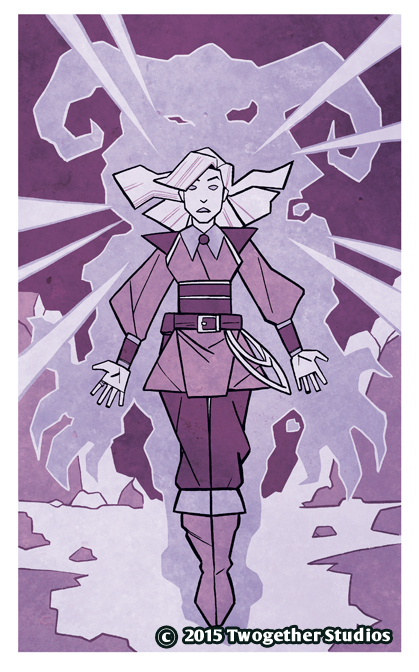
Looking at the power of the Council of Ashtakala, people might wonder why the Lords of Dust haven't conquered the world. A rakshasa’s first answer to this would be, “Haven’t we?”
"Eternal Evil," Dragon 337
This month is challenging for many reasons, so rather than writing a long article I planned to write a number of smaller articles addressing questions posed by my Patreon supporters—questions like...
How do the Lords of Dust actually manipulate the people of Khorvaire, considering that their mental manipulation magics are not quite on par with, say, the Dreaming Dark? What's the edge that allows them to compete with even mundane intelligence agencies such as the Dark Lanterns or House Phiarlan?
The problem is that sometimes questions that SEEM like simple topics turn out to have a lot of layers, and this turned out longer than planned. But let's start with the shortest summary. How do the Lord of Dust manipulate the people of Khorvaire?
- The Lords of Dust have been manipulating the people of Khorvaire since before there were people on Khorvaire. They don't need to subvert people as the Dreaming Dark does, because they have a vast network of pawns that have been serving them for many generations.
- Because of this, they already have people in influential positions in most major institutions and organizations in Khorvaire. They generally don't directly control any of those organizations, but they are able to control the flow of information, burying reports, guiding the leaders in particular directions, and so on. And they do have Thuranni assassins, Dark Lanterns, and Trust agents (among others) who are directly loyal to them if they need them.
- They have amassed vast wealth over the course of a hundred thousand years. Their top agents are mind-reading fiends. When they do need to put pressure on someone new, they can use both gold and secrets to do so.
- They know possible paths of the future. They can start political movements that they don't directly control because they know that in a century that movement will accomplish the thing they want it to. They have the Butterfly Effect on their side; they DO know that this one butterfly flapping its wings will cause a hurricane across the world in a decade. Now, that knowledge isn't ABSOLUTE. They don't know the impact of EVERY butterfly. But they know a few of them, and use those to their benefit.
- A fun way for the Lords of Dust to manipulate people in the present is Faustian bargains: Give me your soul and I will grant you great wealth! Beat me at fiddling and I'll give you this golden fiddle, but if you fail I take your life! The point is that FIENDS CAN LIE. Sul Khatesh can actually form warlock pacts, but a normal rakshasa CAN'T actually claim your soul. The point of this is the butterfly effect. What the fiend WANTS is for you to have this golden fiddle or to have wealth (which the Lords of Dust can easily grant through their connections and amassed resources) because somehow those things advance the prophetic path they are trying to lock in. But they want you to think that you WON the fiddle, or that they have claim to your soul... when both of these were just set dressing so people wouldn't try to understand their REAL motives.
That's the short answer. But as I said, there's a lot more to this. So if you'd like to know more, read on.
An important step in planning an Eberron campaign is to decide which major villains you want to use, because you don't have to use them all (and I personally wouldn't). There's nothing wrong with saying that it's going to be a century before the Lords of Dust have an opportunity to release an overlord, that the stars aren't right for any of the daelkyr, or that the Dreaming Dark is content in Riedra for the moment. So first of all, keep in mind that there's no rule stating that the Lords of Dust HAVE to be actively competing with the Dreaming Dark, because it could be that the Lords of Dust aren't trying to accomplish anything significant at the moment.
In choosing which villains you want to use, you want to consider the difference in their goals and methods, something I briefly discuss in this article. The Dreaming Dark is an alien force that seeks to conquer through subversion and infiltration, and this is why its tools are mind seed and possession. The story of the Dreaming Dark is a story of people you trust being turned against you, a story of secret invasion. The Lords of Dust tell a very different story. They have immense power in the present day. They have resources they've been amassing for a hundred thousand years. They have access to artifacts and eldritch machines. They have agents in place in every major house and organization. But they don't care about the present day. Look back to the quote that opened the article. The Lords of Dust aren't trying to conquer the world, because from their perspective they already have. They don't want the trouble of openly ruling pathetic mortals, but through their vast network of pawns, they already have all the power they need in the present. Their goal isn't to infiltrate existing organizations, because if they need to infiltrate an organization, they've already done it. Their goal is to shape events that will in turn shape the path of the future. Let's take a quick look at the resources they have available.
- The Lords of Dust are immortals who have been present since time began. They have been planning their schemes for a hundred thousand years. This has given then time to amass vast resources and to shape civilizations on both a large and small scale; the "Eternal Evil" article notes that when Lhazaar planned her expedition to Khorvaire, a rakshasa was advising her.
- Through their studies of the Draconic Prophecy, they not only know the paths that will release their overlords, but they have a general roadmap of the paths the future can take. So that raksahsa guiding Lhazaar wasn't acting blindly; they KNEW the consequences of pointing Lhazaar at Khorvaire and were intentionally shaping the future. The Lords of Dust are the organization who could build a vault in the wilderness because they know that THREE THOUSAND YEARS LATER it will be important. Again, think of them as time travelers; they just have to live their way forward to their desired future instead of jumping back and forth.
- The central core of the Lords of Dust are rakshasa. Their leaders—Hektula, the Wyrmbreaker, etc—are exceptionally powerful rakshasa. But even the default rakshasa is a shapeshifting, mind-reading fiend with a range of enchantment and illusion abilities and potentially, the ability to return after death. But in many ways, the most powerful rakshasa ability is their spell immunity. A rakshasa cannot be "affected or detected" by spells of 6th level or below unless it allows it. That includes things like detect evil and good, see invisibility, and even true seeing. It allows them to walk through magic circles and forbiddance as if they weren't there. They can ignore the vast majority of tools that would normally be used to detect the presence of fiends or to defend against them. It's up to the DM to decide what it means that you "can't be affected or detected" by, say, true seeing or zone of truth. In MY campaign I say that both spells appear to work normally even though they don't; so a truthteller BELIEVES the rakshasa has been affected by zone of truth even though they haven't, and true seeing shows the rakshasa's disguise self as it it was its true appearance. So again, the point is that the rakshasa have a huge advantage because the magic we rely on for our highest security doesn't work on them; the rakshasa CAN lie in a zone of truth and can look a top Medani agent in the eye without its true nature being exposed.
- The majority of the agents of the Lords of Dust are mortal "pawns." Some of these are what Exploring Eberron calls loyalist cultists, who know the power they serve and and proud of this allegiance. But just as many are devoted to SOMETHING or SOMEONE but don't realize that this is a fiend or a creation of fiends. Again, the Lords of Dust have been working at this since before human civilization existed, and they are shapeshifting, mind-reading fiends with a map of the future. They have created political movements, art movements, devoted groups of friends, what have you -- all to gain pawns who will do a favor at the precise moment it's needed, likely never knowing the full significance of that favor. One of the most important functions of a pawn is to be in a useful position that allows a rakshasa to temporarily take their place at critical moments. It's a waste to have a rakshasa working as a clerk in the royal archives of Breland for thirty years. But the Lords of Dust may have a PAWN working as a clerk, and on the three days where there's something vitally important that the Lords of Dust need in the archives, a rakshasa can take the pawn's place and accomplish those tasks. Again, it's almost impossible to identify these pawns, because FOR THE REMAINING THIRTY YEARS that pawn is just a loyal clerk doing their job and they don't even KNOW what the rakshasa did or why it did it when they let it take their place.
So the story of the Dreaming Dark is one of aliens infiltrating our world. The story of the Lords of Dust is one of discovering that aliens infiltrated our world thousands of years ago and have been secretly pulling the strings ever since. The goal in dealing with the Lords of Dust isn't to UTTERLY DEFEAT THE LORDS OF DUST. They're simply too deeply entrenched, not to mention immortal, and again, they are actually part of the status quo of society as we know it. You've lived alongside them all your life, and they NEED the world to generally be stable; if they need you assassinate Queen Aurala in order to free Sul Khatesh, they need there to be a Queen Aurala. So the goal is to disrupt their immediate plans so that they will go back to the drawing board and scheme for another two centuries while our lives go on as normal.
When dealing with the Lords of Dust, part of the question is what you're actually dealing with. You can use them in small ways or as major villains. Here's a quick overview.
- Lone Wolves. The schemes of the Lords of Dust unfold over the course of centuries. What do they do to pass the time in the space in between? Adventurers could clash with a fiend who, while technically tied to the Lords of Dust, is pursuing an entirely personal agenda. A lone rakshasa could be playing a game with a mortal family—say, killing the second child of each family member when that child reaches their 22nd birthday—just for fun. They could start a cult of serial killers because it amuses them to do so. They could seek revenge on a dragon that annoyed them a thousand years ago. In creating lesser fiends, consider that they are likely to share some traits with the overlord they serve. Minions of Sul Khatesh may be interested in arcane experiments, minions of Rak Tulkhesh may enjoy murder and cruelty, and minions of Eldrantuklu love intrigues. So essentially, you can have a villainous fiend—even a member of the Lords of Dust—without the adventure being about THE LORDS OF DUST.
- Doing What They Love. Mordakhesh and Rak Tulkhesh love to spread war and hatred. Hektula and Sul Khatesh love to have people using magic in ways that sow fear. These schemes don't necessarily AMOUNT to anything; they are literally just a way to pass the time for a few centuries while they wait for their next release-the-overlord possibility to come around. In general, you can think of this as "feeding the overlord." It's not like Rak Tulkhesh can starve to death, but if Mordakhesh can feed him war he is HAPPY and that in turn pleases Mordakhesh. So he LIKES to sow hatred even when there's no world-shattering threat involved, as long as he doesn't cause so much chaos that it interferes with future plans. So you can fight an evil wizard who's empowered by Sul Khatesh and do something good by defeating them, but the FATE OF THE WORLD was never at stake and Hektula herself doesn't care too much. You did a good thing that protected the local community from that wizard, but it's not like Hektula will vow vengeance because she has literally done THOUSANDS OF TIMES. Sometimes the seeds grow into beautiful bloody flowers, sometimes troublesome adventurers stop them. No big deal... she'll plant more.
- Butterfly Collectors. It's possible that one or more of your characters has a critical role to play in events that will trigger the release of Sul Khatesh... two hundred years from now. The whole idea of manipulating the Prophecy is that it takes generations to play out. As such, it's possible that a Lord of Dust needs the adventurers to do something that doesn't threaten them or the world in the present day, and that could even be useful to them. Consider The Hobbit: Gandalf could be a disguised rakshasa, who brings the dwarves to the Shire, convinces Bilbo to join their company, and helps them defeat Smaug because he knows that if Bilbo joins them he WILL find the One Ring, and he's just laying the groundwork for the events of The Lord of The Rings, which will occur a century later. But in the short term, Bilbo and his friends defeat a dragon, find a magic ring, have great adventures and become friends. This is exactly the sort of thing a Lord of Dust could set in motion; it not only SEEMS innocent, it IS innocent... until a century later, when the fate of the world is determined by these events. Remember that the Lords of Dust are limited by needing the correct mortals to fulfill the Prophecy, because they need things to happen in the proper way. In this example, Hektula might know EXACTLY where the Ring is the whole time, but she needs BILBO to defeat Golumn in the battle of riddles and to claim it himself.
- Loyalist Cults. Many pawns work for the Lords of Dust without knowing it. But all of the overlords have cults that DO know who they work for and revel in it. The Carrion Tribes of the Demon Wastes are examples of this, but there can be fiend cults throughout Khorvaire. If you need a quick minor villain, great, use an overlord cult. This is in the middle of this list because it can go in either direction. The cultists could be engaged in a scheme that will lead to the release of an overlord, or they could just be in that "doing what they love" role. Rak Tulkhesh loves to have cults shedding blood, and it could be that's all that's going on—and you stopping that cult is just a good thing for everyone. Or it could be that the actions of that cult are part of an early stage of releasing an overlord. The question there is whether a) by the time the adventurers defeat the cult, they have already done the critical action they needed to perform to push the prophecy to the next level or b) whether the cult being defeated WAS PART OF THE PLAN ALL ALONG. Because that's the way the Lords of Dust work; they may have pushed their cult into your path because they NEEDED you to defeat them. Exploring Eberron discusses the cults of five different overlords.
- Releasing an Overlord. This is the main event: the idea that the Lords of Dust are working toward the release of an overlord, and that a release—or at least a partial release—could occur in the course of a campaign. This requires the Lords of Dust to get a particular path of the Draconic Prophecy to pass; this is discussed in this article. The critical point is that these are things that have MANY steps and you're just coming in at the end; they have likely been working on this for centuries, and these are the last steps. So usually this is something that adventurers will discover at a critical point and then have to fight on multiple steps. The challenge is that the rakshasa have a map of the future and the adventurers don't. As noted above, it could be that by the time the adventurers defeat a cult they've already accomplished what they needed to do, or it could be that defeating the cult was part of the plan.
- Rebinding an Overlord. Here's the thing: preventing the release of an overlord isn't nearly as much fun as rebinding an overlord that has been partially released. If you successfully keep the plan from succeeding, you never actually get to see how bad things could be. History is full of moments when the plans of the Lords of Dust were blocked and NOBODY KNOWS ABOUT THEM. But everybody knows about Tira Miron's sacrifice to rebind Bel Shalor, because the Shadow in the Flame WAS partially released and terrorized Thrane for months before Tira figured out how he could be defeated... which meant identifying a different path of the Prophecy (she needed to be channeling a couatl; to be wielding Kloijner; to fight him at a particular place and time; to be working with specific allies). A campaign involving the partial release of an overlord gives all sorts of opportunities to battle fiends and unravel mysteries, and to ultimately fight an aspect of the overlord (which is what the stat blocks in Rising represent, though they are MUCH weaker than the overlords presented in third edition)... While a campaign in which the adventurers just block the release can feel anticlimactic.
You might well say "If the Lords of Dust are so powerful, why don't they just kill the player characters the moment they become a threat?" Because sure, from a mechanical standpoint they easily could. They have hundreds of rakshasas—possibly thousands—epic magic and countless pawns in positions of power. The reason they don't turn all the power against the adventurers is because they need the player characters—or at least, believe that they MIGHT need the player characters. You know how we always say that player characters are remarkable and that they're the heroes of the age? That's because they are PROPHETICALLY SIGNIFICANT. It may be that the Lords of Dust have specific plans that they need to use the PCs for (Hektula needs you to kill Queen Aurala to release an overlord) or it could be that they are just the first dominos in a long line (Hektula needs your wizard's GREAT-GRANDAUGHTER to kill Aurala's great-grandson... and your wizard doesn't even have any children yet). They may not even KNOW what role they need you for, but they know you're significant and they're figuring it out. This is why pawns of the Lords of Dust tend not to be the people IN power, but rather the advisors, the scribes, the people in the background. The Lords of Dust can't force the actions of prophetic lynchpins without derailing the prophecy. They couldn't just replace Lhazaar with a rakshasa or use dominate person (which any raksahsa can cast) on her; they needed her to CHOOSE to go to Khorvaire. It's the same here. They can manipulate the adventurers by manipulating the events around them, but they can't just mind control them or replace them.
One way to think about it is rats in a scientist's maze. Your PC is a rat and the Wyrmbreaker wants you to go down a particular path. He can try to lure you to go the way he wants—drop a piece of cheese down the right path—but he can't just PUSH you down the path or the experiment becomes invalid. Should you at the final moment FAIL to go down the proper path, he's not going to kill the rat; what's the point? Instead he's going to put you back in the cage and start figuring out the next experiment. Because that's the thing: there will ALWAYS be a way to release the overlords. The moment Tira rebound Bel Shalor, a new path for his release began to take shape. It could take centuries for the Lords of Dust to identify that new path, and a thousand years before they have a chance to make it happen, but they WILL figure it out. Dustoran has tried and failed HUNDREDS OF TIMES. When you foil his plot, he's going to just move on to the next one. And let's face it, even if he was certain he has no further use for you, he doesn't NEED to kill you. You're mortal. If you're human, you'll be dead in a few decades; he'll still be here in ten thousand years.
That's all for now! Thanks as always to my Patreon supporters for posing this question and for making these articles possible!